












Does Adenomyosis Go Away After Menopause? For most women, period pain and heavy menstrual bleeding ease noticeably after menopause, but this does not mean the problem is completely over. As estrogen levels decline, symptoms usually become milder, but the tissue changes and damage that have already formed in the uterus may persist. It is therefore still important to pay attention to your health and to possible complications after menopause.
This article walks you through 3 possible effects of adenomyosis after menopause and the body changes before and after menopause. It also explains the differences between natural menopause and medically induced menopause, so you can better understand how to manage your health going forward.
Does Adenomyosis Go Away After Menopause? 3 Complications to Watch For
After menopause, the ovaries stop functioning and the body produces significantly less estrogen. With no more menstrual periods, most of the symptoms caused by adenomyosis, such as severe period pain and heavy menstrual bleeding, usually improve noticeably, which can ease physical discomfort.
However, adenomyosis lesions do not simply disappear because of menopause. After menopause, it is still important to watch for the following 3 possible lingering conditions and complications:
-
The uterine muscle does not return to its original size: Unlike uterine fibroids, adenomyosis lesions do not necessarily shrink as hormone levels fall during menopause. A uterus that has become swollen and enlarged because endometrial tissue has grown into the muscle wall may therefore not return to the size it was before the condition developed.
-
Lasting damage to the uterine muscle (hardening and fibrosis): Adenomyosis can cause the muscle wall of the uterus to thicken and harden. Clinically, doctors sometimes describe adenomyosis as “cirrhosis of the uterus,” meaning that it causes real structural damage and changes to uterine tissue. This kind of hardening damage may not improve even after menopause.
-
Chronic pelvic pain: Although period pain stops after menopause, adenomyosis often occurs together with other pelvic problems, such as bowel adhesions. If adhesions in the pelvis formed during the earlier stages of the disease, you may continue to feel pain even after menopause.
We also remind patients that, even after menopause, the effects of long-term inflammation and tissue damage may persist. Menopause can ease the discomfort and pain caused by menstruation, but we still recommend continued follow-up of your uterine health, to keep your body stable and give you greater peace of mind.
Why Is Adenomyosis So Closely Linked to Hormonal Changes?
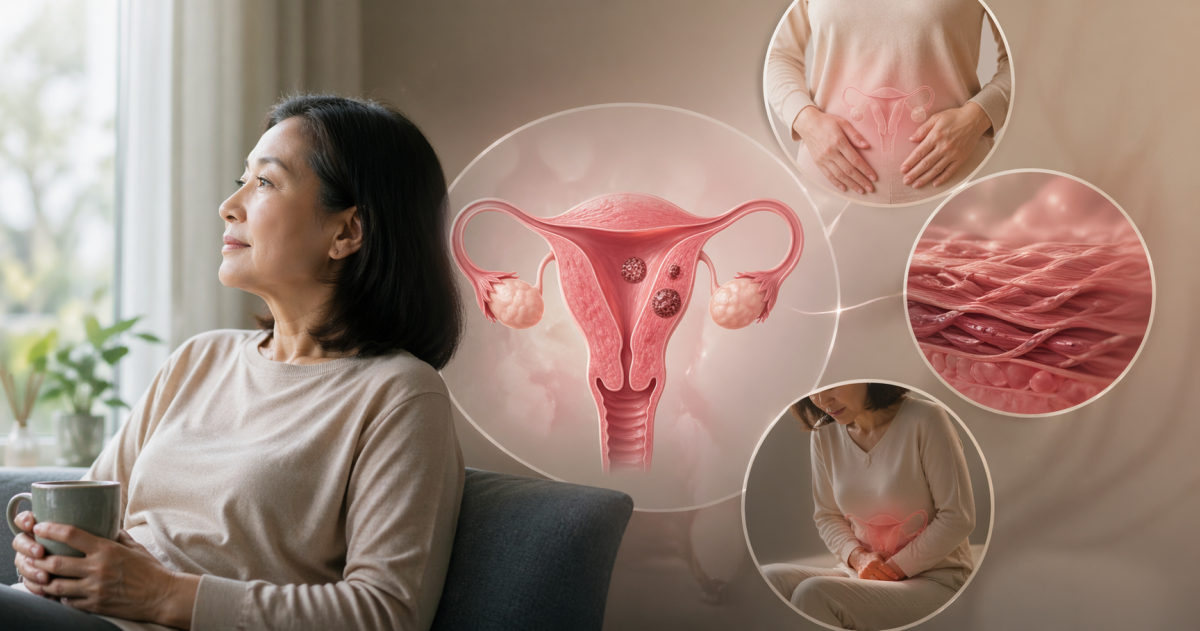
Adenomyosis is a benign condition and a type of endometriosis in which endometrial tissue, which normally lines the inside of the uterus, grows abnormally into the muscle wall of the uterus. This misplaced tissue disrupts the structure of the uterus, causing the muscle wall to thicken and harden, and leading to inflammation and swelling throughout the uterus.
Its development is closely tied to hormones, especially changes in estrogen, which affect the condition in the following 3 ways:
-
Estrogen stimulates abnormal growth and inflammation: Endometrial tissue that has grown into the uterine muscle still responds to estrogen, growing and bleeding repeatedly with each menstrual cycle. However, this blood cannot leave the body. Over time it builds up, causing chronic inflammation and swelling in the uterus, which leads to period pain and heavy menstrual bleeding.
-
Interference from environmental hormones: Besides the hormones made in the body, environmental hormones in daily life may also affect the condition. Endocrine-disrupting chemicals, such as plasticizers and those found in some cleaning and skincare products, may upset hormonal balance. They are also thought to be linked to the earlier onset of adenomyosis seen in younger women in recent years.
-
Declining hormones and symptom relief: The activity of adenomyosis depends heavily on estrogen. After a woman enters menopause, estrogen production falls and the misplaced tissue loses this stimulation, so growth and bleeding decrease. Although the uterus cannot return to its original state, most patients experience noticeable improvement in period pain and heavy bleeding.
Read more:
How Much Does IUI Cost? Understanding the Limitations of IUI and Tips for Success
Infertility Symptoms and Causes: Understanding the Traits of Lower Fertility and 3 Ways to Support Your Health
Does Adenomyosis Go Away After Menopause? Natural vs. Medically Induced Menopause
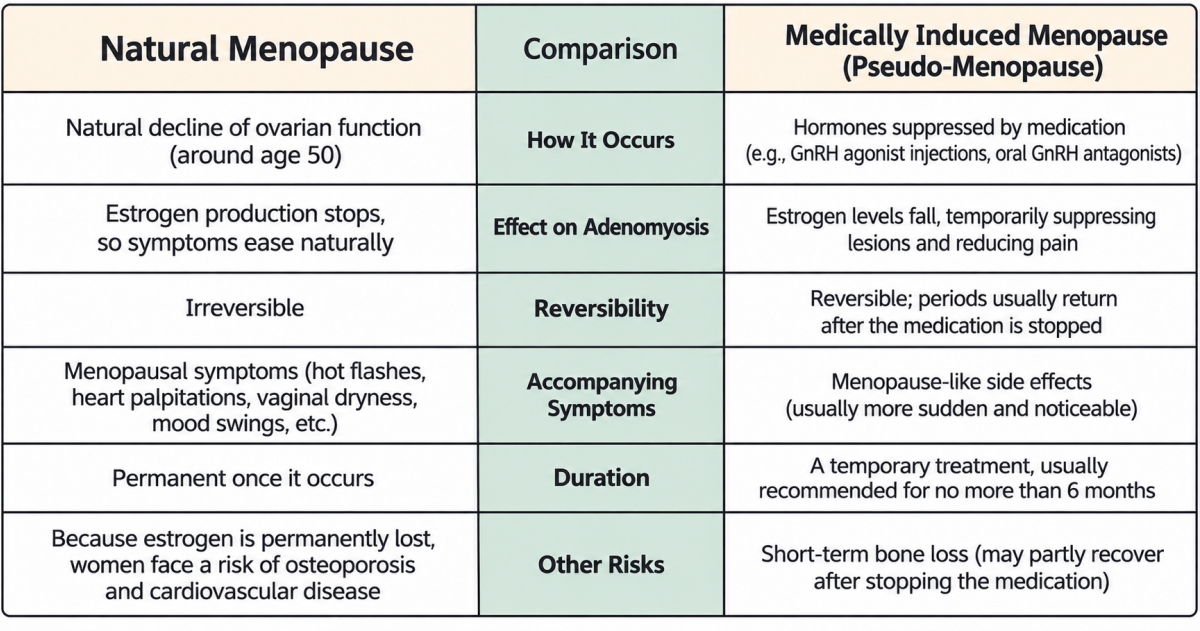
In the treatment of adenomyosis, controlling estrogen is key to easing symptoms. There are two common approaches: natural menopause and medically induced menopause. In natural menopause, ovarian function gradually stops with age and estrogen production declines, so symptoms ease as well. In medically induced menopause, medication temporarily suppresses hormones and puts the body into a menopause-like state, helping to control the activity of the lesions.
These two approaches differ in how they work, how long the effects last, and the situations they suit. The table below summarizes the key points to help you understand the differences more easily.
What Symptoms Can Appear After Menopause? Body Changes You Shouldn’t Ignore
After a woman enters menopause, the ovaries stop functioning and estrogen levels fall sharply, so the body goes through a series of changes. Here is a summary of the symptoms that may appear after menopause:
- Hot flashes, night sweats, mood swings, and sleep disturbances: Whether you reach menopause naturally or experience pseudo-menopause through medical treatment (such as GnRH agonist injections), declining estrogen can trigger typical menopausal symptoms. Common signs include hot flashes, night sweats, insomnia, low mood, and mood swings.
- Osteoporosis: Estrogen helps protect bone health. Staying in a low-estrogen state for a long time after menopause can speed up bone loss and raise the risk of osteoporosis.
- Abnormal bleeding after menopause: Although adenomyosis itself has a low chance of becoming cancerous, persistent bleeding, a uterus that enlarges within a short time, or abnormal thickening of the endometrium calls for further evaluation to rule out endometrial hyperplasia or endometrial cancer. The risk may also be higher for women who reach menopause later.
- Thinning of vaginal and urinary tract tissue: Without estrogen to keep them moist, the lining of the vagina and urinary tract gradually becomes thinner and less elastic. This can lead to vaginal dryness and painful intercourse, and may be accompanied by frequent urination or urinary incontinence.
- Lower basal metabolic rate: Hormonal changes and aging slow down metabolism. Without adjustments to diet and lifestyle, weight gain and fat accumulation can occur more easily.
- Difficulty concentrating and memory changes: Some women experience trouble concentrating, memory decline, or slower thinking around menopause, which is related to the effects of hormonal fluctuations on the central nervous system.
How to Manage Adenomyosis? How Traditional Chinese Medicine Can Support You with Adenomyosis and Post-Menopause Discomfort
For adenomyosis and discomfort after menopause, many women consider Traditional Chinese Medicine (TCM) alongside Western medical treatment. TCM starts from each person’s individual constitution and works on regulating qi and blood circulation and hormonal balance. It aims to ease period pain, abnormal menstrual bleeding, pelvic discomfort, and emotional stress, helping the body gradually return to a steadier state.
The focus of TCM care differs at each stage. Before menopause, it concentrates on improving qi and blood flow and the condition of the menstrual cycle, to reduce period pain and discomfort. Around menopause, it focuses on changes such as hot flashes, sleep quality, mood swings, and fatigue, to help the body adapt more smoothly to hormonal transitions.
At TFC Taipei Fertility Center, many women with adenomyosis or who are preparing for pregnancy combine TCM care with Western medical treatment. Through TCM constitution assessment and adjustments to the treatment plan, this approach aims to ease discomfort and keep the body stable, which may also help later pregnancy preparation or treatment go more smoothly.
If you are struggling with adenomyosis or preparing for pregnancy, you are welcome to book a consultation with TFC Taipei Fertility Center. Our team can help you find a care approach that suits your individual constitution and circumstances.
Read more:
What Is IVF? A Complete Guide to IVF Success Rates, Process, Costs, and Subsidies
How Many Days Is the Implantation Window After Embryo Transfer? Implantation Symptoms and Factors That Affect Embryo Implantation