












After an IVF embryo transfer, what many people want to know most is: “When will the embryo implant? Does feeling something mean it worked?” In fact, implantation doesn’t happen in an instant. It is a process that depends on several conditions coming together. The timing of implantation can be influenced by the embryo’s stage of development, the condition of the uterine lining, and how the treatment cycle is arranged, and it varies from person to person.
So how many days is the implantation window after an IVF transfer? What changes might you notice in your body during implantation? And which factors can affect the chances of successful implantation? This article walks you through the implantation window, common implantation symptoms, and the key factors that matter, so you can feel more informed throughout your treatment and approach each stage of the wait with greater peace of mind.
What Is the Implantation Window? How Many Days Is the Implantation Window After an IVF Transfer?
The implantation window refers to the brief period when the uterine lining is most receptive to an embryo, typically lasting only about 3 to 5 days. During this time, the thickness, blood flow, and receptivity of the uterine lining reach a more favorable state, helping the embryo attach and begin to develop. If this critical window is missed, the chances of implantation may be reduced, even when the embryo is of good quality.
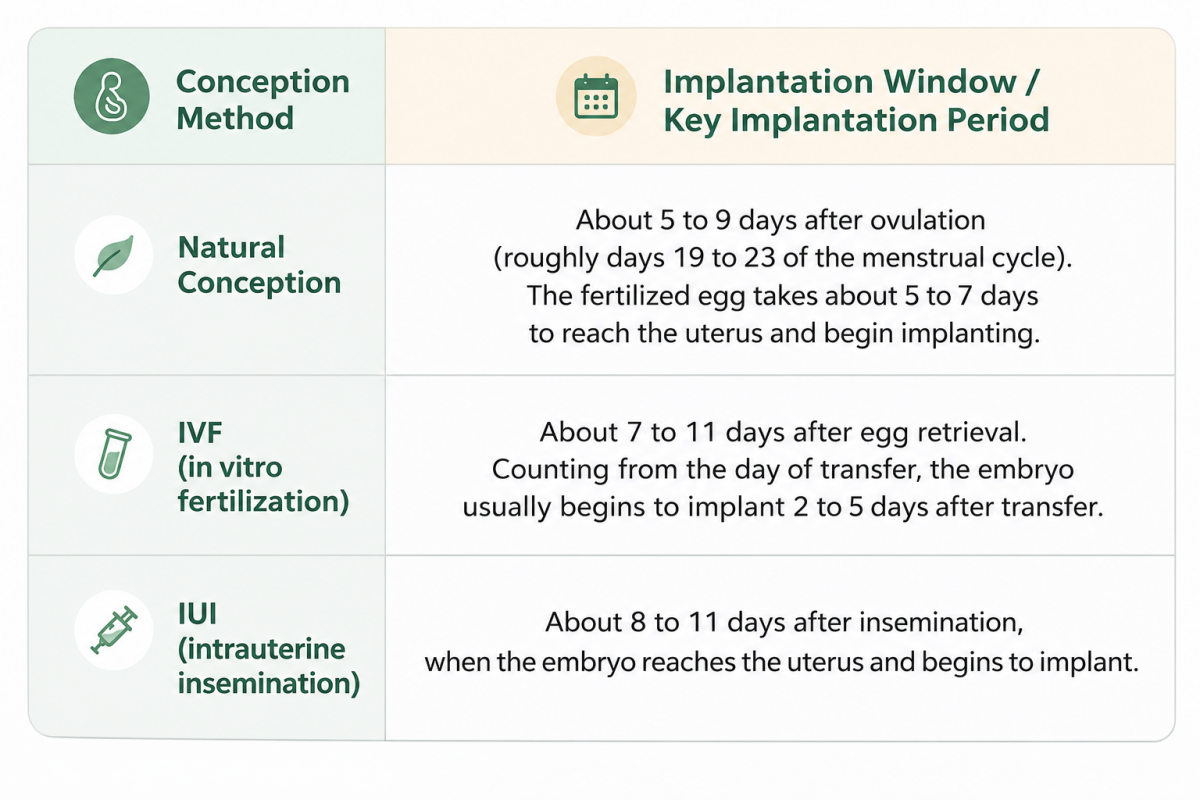
In an IVF cycle, implantation timing is often estimated from different reference points. Counting from the day of transfer, an embryo usually begins to implant within 2 to 5 days after transfer, with days 3 to 4 being the most common peak. For a Day 5 blastocyst (D5), implantation usually occurs about 2 to 3 days after transfer, while a Day 3 embryo (D3) may take about 4 to 5 days.
Because ovulation timing and progesterone supplementation differ across conception methods, implantation timing also varies. The details are summarized below:
TFC Taipei Fertility Center notes that the time when the uterine lining is most receptive to an embryo typically falls about 120 ± 12 hours after ovulation or after progesterone administration begins. If this critical window shifts earlier or later, it is called a “displaced window of implantation,” which may affect whether the embryo can implant successfully. In clinical practice, about 30% of recurrent implantation failure cases are associated with this condition.
When Do D3 and D5 Embryos Implant? What Can Help Improve the Chances of Success?
TFC Taipei Fertility Center notes that the time when the uterine lining is most receptive to an embryo typically falls about 120 ± 12 hours after ovulation or after progesterone administration begins. If this critical window shifts earlier or later, it is called a “displaced window of implantation,” which may affect whether the embryo can implant successfully. In clinical practice, about 30% of recurrent implantation failure cases are associated with this condition.
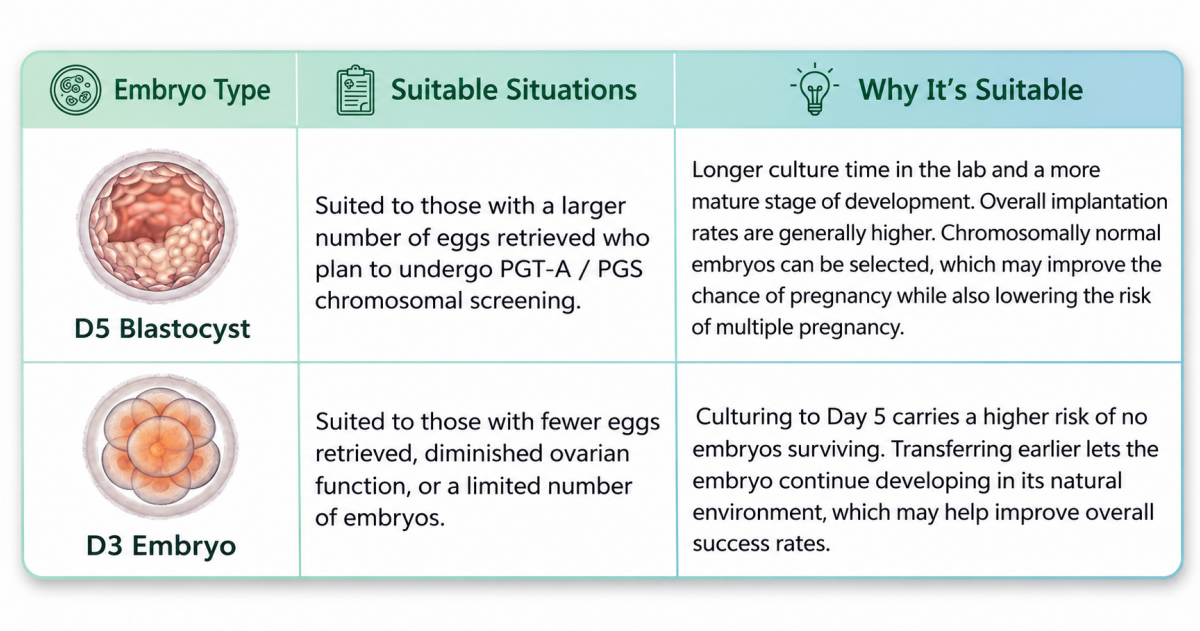
Embryos transferred at different stages of development implant at different times. In general, a Day 5 (D5) blastocyst may begin implanting within 2 to 3 days after transfer, while a Day 3 (D3) embryo, which is at an earlier stage of development, enters the implantation stage about 4 to 5 days after transfer.
To improve the chances of implantation, the uterine environment and post-transfer lifestyle matter just as much as embryo selection and transfer timing. The key points are outlined below:
Suitable Situations for D3 Embryos and D5 Blastocysts
Whether implantation succeeds depends on whether the embryo’s stage of development lines up with the uterine lining’s “implantation window.” A fresh embryo is transferred directly, 3 to 5 days after egg retrieval. A frozen embryo gives the body time to recover first, and the transfer is then scheduled when the lining is in a more favorable condition (thickness, blood flow, and progesterone levels). So fresh is not necessarily better. What matters most is the receptivity of the uterine lining. If you have experienced recurrent implantation failure, an ERA (Endometrial Receptivity Analysis) test may help identify a more suitable timing for transfer.
Many people also assume they need to stay in bed for a long time after transfer, but this is a common myth. Bed rest has not been shown to improve pregnancy rates, and it may affect blood circulation. We suggest resting at the clinic for about 15 to 30 minutes, after which you can go home and return to your normal daily routine and work rhythm. Moderate daily movement supports circulation and medication absorption. At the same time, avoid lifting heavy objects, intense exercise, and excessive fatigue, and try to stay relaxed, which may help support stable implantation.
What Are the Signs of Successful Implantation? Can You Have Implantation Bleeding?
After an embryo successfully implants, hormones in the body (such as progesterone, estrogen, and human chorionic gonadotropin, or hCG) begin to change, and you may notice some subtle signs. Here are 10 symptoms that may appear after successful implantation:
- Implantation bleeding: When the embryo attaches to the uterine lining, it may cause light bleeding. It is usually pink or light brown, small in amount, and appears as spotting. It typically stops within 1 to 3 days, which differs from menstrual bleeding, where the flow is heavier and bright red.
- Lower abdominal pain (implantation cramping): During implantation, some women may feel mild dull aching, a pulling sensation, or brief sharp twinges in the lower abdomen. This discomfort usually eases gradually within 2 to 3 days. If you experience severe pain, seek medical attention promptly.
- Breast swelling: As estrogen and progesterone rise, the breasts may become tender, swollen, or sensitive, and the nipples may darken in color. You may feel discomfort during daily activities or when sleeping on your side.
- Fatigue and drowsiness: Hormonal changes, combined with progesterone supplementation during treatment, may leave you feeling tired even when you are getting enough rest. Moderate rest can help your body adjust and stay balanced.
- Increased vaginal discharge: Hormonal changes can increase cervical secretions, which may become wetter and thicker, helping to protect the uterine environment.
- Digestive issues: Progesterone affects intestinal motility and slows digestion, which may cause bloating, abdominal fullness, or constipation.
- Nausea: Hormonal changes can make taste and smell more sensitive, leading to mild nausea or the urge to vomit, which is often more noticeable in the morning.
- Frequent urination: After implantation, hCG begins to be secreted, and slight changes in the uterus may press on the bladder, so you may urinate more often.
- Implantation dip: Around days 6 to 10 after ovulation, basal body temperature may briefly drop by about 0.5°C and rise again the next day. This is known as an implantation dip.
- Mood swings: Rapid hormonal shifts may make you more emotionally sensitive, with irritability, tearfulness, or bigger swings in mood.
Based on clinical experience at TFC Taipei Fertility Center, whether the symptoms above appear varies from person to person, and having no symptoms at all does not mean implantation has failed. We recommend staying relaxed, keeping to your normal routine, and returning on the date your doctor schedules for a blood test to check β-hCG (usually 10 to 14 days after transfer) to confirm whether you are pregnant.
Post-Transfer Q&A
Q: How long after implantation does hCG start to be produced?
Once the embryo has successfully implanted, trophoblast cells begin secreting human chorionic gonadotropin (hCG). Over time, hCG levels in the body rise gradually, so testing by blood draw or home pregnancy test is usually recommended 9 to 14 days after transfer, when levels are more likely to reach a detectable threshold.
Q: How long after a failed transfer will my period start?
If your follow-up test confirms that implantation did not occur, you will stop the medications used during treatment (such as progesterone), and your period usually starts naturally some time after stopping. Please note that before the official pregnancy test, even if you notice bleeding that resembles a period, we do not recommend stopping your medication on your own. Continue to follow your doctor’s instructions so that a possible implantation is not affected.
Q: How long after transfer should I take a pregnancy test?
Testing 9 to 14 days after transfer is generally recommended, as results tend to be more accurate during this period. The exact timing also varies with the embryo’s stage of development:
-
D5 blastocyst transfer: Testing on days 9 to 14 after transfer is recommended.
-
D3 embryo transfer: Testing on or after days 12 to 14 after transfer is recommended for a more accurate result.
Q: Who are D3 embryos and D5 blastocysts suitable for?
Each suits different groups, and the choice should be assessed based on your individual situation.
-
D5 blastocyst: More suitable for those with a larger number of eggs retrieved and more embryos, who wish to undergo chromosomal screening (PGT-A / PGS), or who wish to lower the risk of multiple pregnancy and may improve the chance of success per transfer. Because blastocysts are more developmentally mature, overall implantation rates are generally higher.
-
D3 embryo: More suitable for those with fewer eggs retrieved, diminished ovarian function, or a limited number of embryos. If an embryo’s lab culture conditions are more limited, transferring it into the uterus earlier so it can continue developing there is also a viable strategy.
Q: If I have implantation bleeding, can I take a pregnancy test right away?
We do not recommend it. Even if you have bleeding that may be implantation bleeding, hCG levels in your body may still be too low for a home test to detect, and testing too early can easily produce a false negative. A more accurate approach is to return to the clinic as scheduled by your doctor for a β-hCG blood test about 14 days after transfer.
Q: Does implantation bleeding come with abdominal cramping?
It can. When the embryo settles into the uterine lining, some people also feel mild dull aching, a pulling sensation, or brief sharp twinges. This discomfort usually eases within 2 to 3 days. If the pain is pronounced or keeps getting worse, please seek medical attention as soon as possible.
Q: Will I always feel something when implantation occurs?
Not necessarily. Everyone’s body responds differently and has a different level of sensitivity, so noticeable symptoms do not always appear. Having no sensations at all does not mean implantation has failed. We suggest staying calm, following your medication schedule, and waiting for your follow-up test results.
Q: Will there always be bleeding after an embryo transfer?
Not necessarily. Although implantation bleeding is one of the more common signs, not everyone experiences it. In addition, light pink discharge may appear on the day of transfer from contact with the catheter. This is normal, but it does not happen every time.
Q: What should I do if I have bleeding after transfer?
Try not to panic. You can assess the bleeding by its amount, color, and timing. Light pink or brown spotting is most often due to implantation or mild irritation from the transfer, and it is common and not necessarily abnormal. In this case, be sure to continue your medication as directed, do not stop progesterone on your own, and pause exercise and get more rest.
If the bleeding increases noticeably, turns bright red, comes with clots, or lasts more than a week, along with abdominal pain or bloating, we recommend returning to the clinic for an examination as soon as possible.
Key Factors That Affect Embryo Implantation Success
Whether an embryo can implant successfully usually depends on several conditions working together, including the embryo itself, the uterine environment, and treatment and lifestyle factors. Here are five key factors:
- Embryo quality: During treatment, the embryo’s stage of development and chromosomal status are assessed first. In general, embryos that develop well and are chromosomally normal have a higher chance of implanting.
- Uterine environment: The thickness and structure of the uterine lining are important conditions for implantation.
- Implantation window: The implantation window differs slightly from person to person. If the embryo’s development and the preparation of the lining are out of sync, implantation outcomes may be affected.
- Medical team expertise and equipment: Every step of an IVF cycle is closely tied to success rates. Doctors adjust medication and transfer timing based on individual circumstances, and laboratory techniques help monitor embryo development.
- Lifestyle and emotional well-being: Long-term stress may interfere with hormone secretion and, in turn, affect the chances of implantation. Staying emotionally steady and keeping a regular routine are therefore important.
TFC Taipei Fertility Center was founded under the leadership of Dr. Chii-Ruey Tzeng (曾啟瑞), known as the “Father of IVF in Taiwan.” If you are considering IVF treatment, TFC offers the following advantages:
- An experienced medical team: Our team brings together several well-regarded specialists in reproductive medicine in Taiwan, with extensive clinical experience. They are skilled in managing complex cases such as advanced maternal age, Premature Ovarian Insufficiency (POI), and recurrent implantation failure, and can develop personalized medication and egg retrieval strategies.
- A high-standard embryo laboratory: TFC has an embryo laboratory built to rigorous standards, equipped with time-lapse embryo culture incubators. Temperature, humidity, and air quality are strictly controlled to help support embryo quality.
- Advanced diagnostic testing: We offer PGT-A (preimplantation genetic testing for aneuploidy) and ERA (Endometrial Receptivity Analysis) to help assess embryo condition and implantation timing.
- A comfortable patient experience: We provide a private, comfortable, and relaxing five-star consultation environment, along with a dedicated app for tracking your appointment progress.
Would you like to learn more about your own implantation conditions and IVF treatment planning? Feel free to consult TFC Taipei Fertility Center. Our professional team can help assess embryo quality, the uterine environment, and treatment timing to help you find a more suitable path toward pregnancy.
Read more:
What Is IVF? A Complete Guide to Success Rates, Process, and Costs