












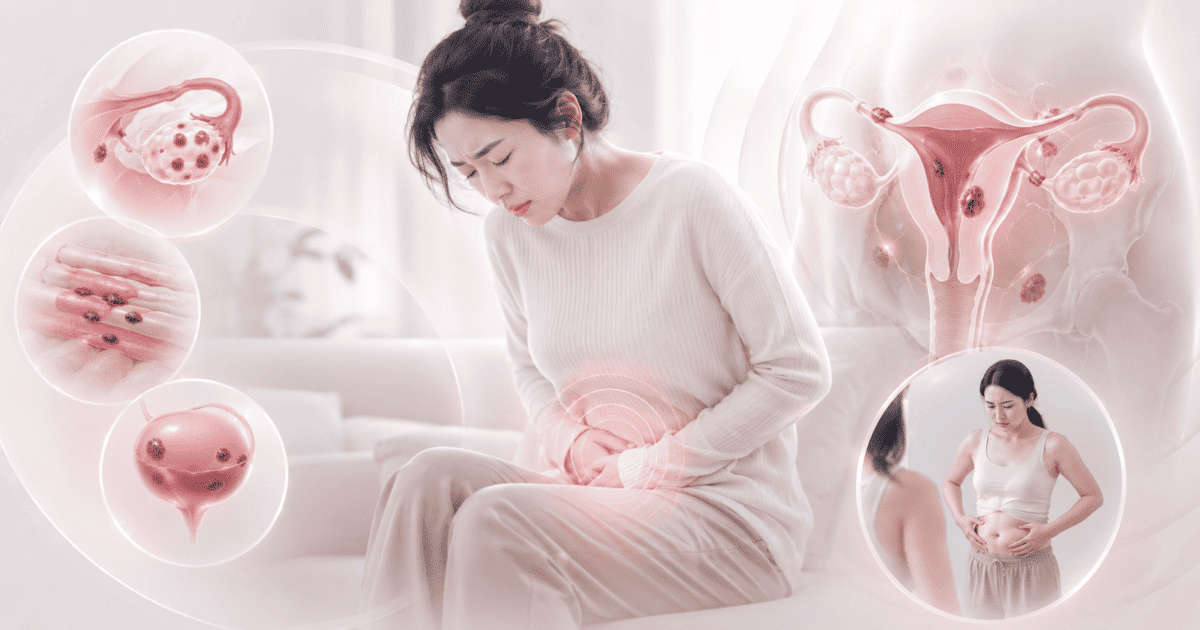
Does endometriosis really cause weight gain? Many women undergoing treatment notice their weight creeping up and their lower belly becoming more prominent, even without any obvious change in diet. Some also feel that their face looks rounder or their clothes feel tighter after starting Dienogest. This article looks at three areas: disease mechanisms, medication side effects, and daily diet. It explains possible reasons for a bigger belly and lower abdominal tightness, helping you understand what may be behind these changes in your body.
Endometriosis and Weight Gain? Understanding Why Your Lower Belly May Look Larger
Endometriosis occurs when endometrial-like tissue that normally grows inside the uterine cavity spreads to the ovaries, pelvic cavity, intestines, or even the area around the bladder. With each menstrual cycle, this misplaced tissue also bleeds and becomes inflamed. Over time, this can cause menstrual pain and infertility, and it may also make you “look heavier.” But have you really gained weight? Here are the 3 most common contributing factors, as explained by TFC:
▍Abdominal Lesions or Cysts Changing Your Appearance (Bigger Lower Belly)
When endometriotic tissue builds up in the ovaries, it may form an endometrioma (chocolate cyst). When a cyst is large, the lower abdomen may look firm and protruding, and some patients can even feel a hard lump when pressing on the lower belly. In these cases, the apparent “weight gain” may be caused by lesion buildup rather than actual fat accumulation.
▍Hormonal Changes Affecting Body Fat and Water Retention
Endometriosis can lead to relatively higher local estrogen levels, which may affect fluid metabolism and body fat distribution. Many women notice that they are especially prone to swelling before their period, or that fat in the lower body is harder to lose. These changes may be closely related to hormonal fluctuations.
▍Side Effects of Treatment Medications
Dienogest and oral contraceptives are the main tools for managing endometriosis, but they may cause fluid retention or changes in appetite, which can lead to a slight increase in weight. Many patients assume they have gained fat, but in most cases the change is often due to water retention and appetite changes. By comparison, GnRH-type medications are generally less likely to cause fluid retention.
Why Does Endometriosis Make Your Belly Look Bigger?
Why do these changes show up in the abdomen? From a medical perspective, endometriosis involves the following 5 mechanisms, which may lead to a “protruding lower belly,” “lower abdominal tightness,” or a belly that “looks like early pregnancy”:
Chronic inflammation causing tissue swelling: Misplaced endometrial tissue bleeds and becomes inflamed every month, creating a chronic inflammatory environment in the pelvic cavity. The inflammatory response may cause congestion and swelling in the surrounding tissue, increasing abdominal circumference and causing a feeling of tightness, which can make you look like you’ve gained weight.
Ovarian cysts crowding the abdominal space: The larger an endometrioma (chocolate cyst) grows, the more likely it is to press on nearby organs and the abdominal wall, causing the lower abdomen to protrude. For some patients, a single 5 to 6 cm cyst on the ovary may be enough to make their pants feel noticeably tighter.
Water retention increasing waist size: Local hormonal fluctuations combined with inflammation may make the body more prone to retaining water, especially around the time of your period. Fluid retention doesn’t only swell the legs; the lower abdomen may also look rounder.
Slower gut motility: When endometriotic lesions grow around the intestines, they may cause pelvic adhesions that interfere with bowel movement, leading to bloating, constipation, and difficulty passing gas. A belly swollen by trapped gas and stool is a less obvious reason why many people feel their “belly is bigger.”
Pelvic adhesions changing body shape: Long-term, repeated inflammation may leave adhesions in the pelvic cavity, causing the intestines, uterus, and ovaries to stick together. Adhesions not only cause chronic lower abdominal pain, but may also make the lower abdomen look uneven or asymmetrical.
Does Taking Dienogest Cause Weight Gain? Common Side Effects and Body Changes Explained
Dienogest is one of the most commonly used medications for managing endometriosis, and one of the questions patients ask most often is, “Will taking Dienogest make me gain weight?” Below, we outline how the medication works, its common side effects, and how to manage them:
▍How Dienogest Works
Dienogest is a selective synthetic progestin, with 2 mg per tablet. It binds selectively to progesterone receptors in the endometrium and in endometriotic tissue, which helps suppress endometrial growth and the activity of endometriotic lesions. This may help ease menstrual pain, reduce menstrual flow, and limit the spread of lesions. Compared with older-generation progestins, Dienogest has no androgenic activity, so its effects on lipid and glucose metabolism, sebaceous glands, and fluid balance are relatively small.
▍Common Side Effects of Dienogest
Most patients tolerate Dienogest well, but some may still experience the following side effects:
- Swelling and weight changes: A small number of patients may experience mild swelling or a weight gain of 1 to 2 kg. This is often caused by water retention rather than actual fat accumulation.
- Appetite changes: Some people notice increased appetite or changes in taste in the early stage of treatment.
- Headaches and mood changes: About 1 in 10 patients may experience headaches, mood swings, or irritability.
- Lighter or irregular periods: Spotting or light, on-and-off bleeding is common in the early stage of treatment and often settles within 3 to 6 months.
So how can you ease these discomforts? Most side effects are temporary, so there is usually no need to worry excessively. Regular exercise and a lower-sodium diet may help your body’s metabolism. Be sure to attend follow-up visits so your doctor can assess whether your dose should be adjusted or your medication changed.
▍Effects of Other Common Treatment Medications
Besides Dienogest, doctors may also combine other medications depending on the severity of the condition. Common types include:
- Progestins (such as Norethisterone): These may cause swelling and weight changes, though actual side effects vary from person to person.
- Anti-hormonal medications (GnRH agents, such as leuprolide): These medications temporarily suppress the body’s hormones, putting the body into a state similar to “pseudo-menopause,” which may come with hot flashes and bone loss. A small number of patients may also notice changes in body fat distribution. Treatment is usually limited to 6 months and is combined with calcium supplementation and add-back hormone therapy to help reduce discomfort.
Does Endometriosis Cause Weight Gain? Frequently Asked Questions
Q: What should I do if I forget to take Dienogest?
The key principle is to take one tablet as soon as possible, and never double up:
If you simply forget a dose
- Take one tablet as soon as you remember. There is no need to stick to the original time.
- Go back to your usual time the next day.
- Do not take two tablets at once to make up for the missed dose.
If you vomit or have diarrhea after taking the medication
If severe vomiting or diarrhea occurs within 3 to 4 hours of taking your dose, the medication may not have been absorbed effectively. Treat it as a missed dose and take one tablet right away.
Q: What should I eat to reduce a bigger lower belly with endometriosis?
We recommend starting with reducing inflammation and supporting hormonal balance. In your diet, you can eat more dark leafy greens, deep-sea fish, and nuts, and cut back on fried foods and excess sugar. Combined with regular exercise and enough water, this may help ease abdominal bloating caused by water retention.
Q: How long do I need to take Dienogest?
Dienogest is a long-term management medication. A typical course is about 6 to 24 months, though the actual length depends on symptom control and family planning. If you plan to become pregnant, discuss the right time to stop with your doctor. If the goal is mainly symptom control, some patients may need to take it long term.
Q: Are there foods or drinks I should avoid while taking Dienogest?
Dienogest has no strict dietary restrictions, but keep these 3 points in mind:
- Avoid heavy drinking: Alcohol affects liver metabolism, may interfere with how the medication works, and adds strain on the body.
- Avoid grapefruit juice: Grapefruit may affect the enzymes that metabolize the medication, which can change its level in your body.
- Watch for interactions with other medications: If you are also taking anticonvulsants, anti-tuberculosis drugs, or certain antibiotics, let your doctor know in advance so that the medication’s effectiveness is not affected.
Q: Can anti-hormonal medication cause weight gain?
Anti-hormonal medications such as GnRH agents may cause water retention and appetite changes, and some patients may feel their weight has risen slightly. These changes are mostly temporary and usually settle gradually after the medication is stopped.
Q: How can I improve a “big belly” through diet?
Dietary changes take time to show results. We recommend combining them with regular exercise and annual gynecological checkups to keep monitoring lesions and body changes. Your daily diet can focus on three goals: reducing inflammation, reducing water retention, and supporting digestion:
- Reduce inflammation: Eat more colorful vegetables, berries, nuts, flaxseed, and deep-sea fish.
- Reduce water retention: Cut back on high-sodium snacks and processed foods, and add potassium-rich foods such as bananas and spinach.
- Support digestion: Get enough dietary fiber and fluids every day, and avoid sitting for long periods.
Does Endometriosis Affect Pregnancy? Treatment and Fertility Guidance from TFC
Beyond changes in body shape, endometriosis may also affect your family planning. Lesions may interfere with ovulation, fallopian tube function, and embryo implantation, and endometriosis is one of the important causes of infertility. If you are thinking about getting pregnant, we recommend talking with a reproductive medicine specialist early. From lesion assessment and ovarian reserve testing to planning your next steps in treatment, getting guidance sooner can give you a clearer direction.
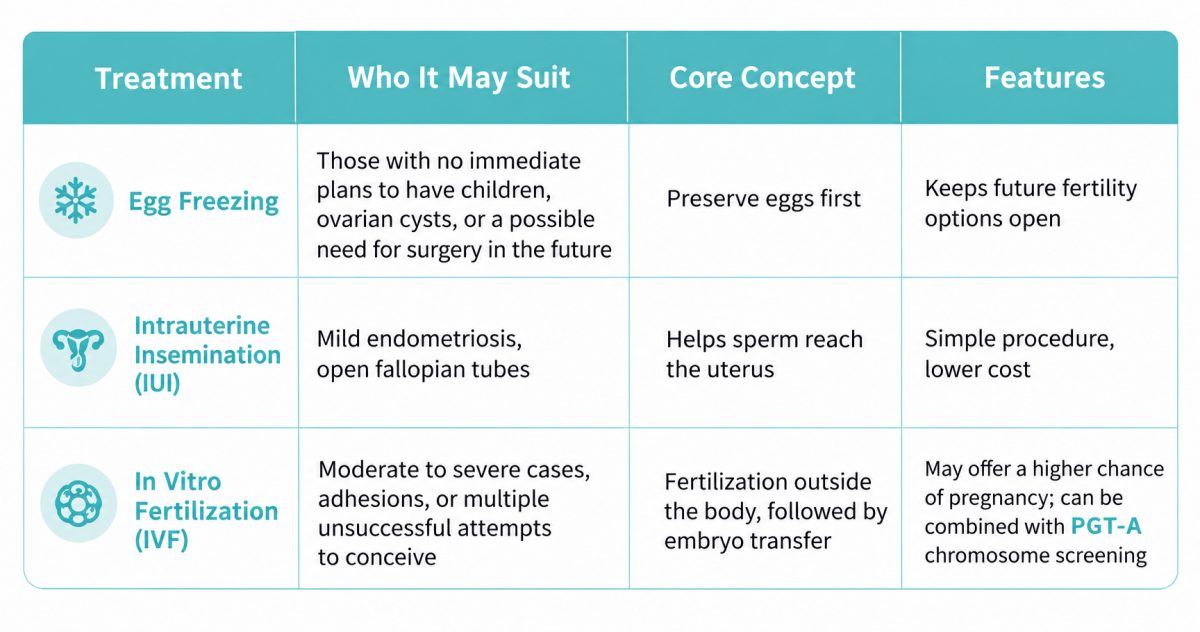
TFC Taipei Fertility Center will help plan a suitable treatment approach based on your age, lesion distribution, ovarian function, and family planning goals. You can now add our official LINE account to book a consultation and get a head start on planning your next steps.