













Endometriosis is a common yet often overlooked health issue among women. Warning signs include severe menstrual cramps and recurring lower abdominal pain. Besides chronic discomfort, endometriosis may also impact fertility, raising concerns like, "Will endometriosis be cured?"
This article outlines the causes, six common symptoms, diagnostic methods, and treatment options to help early detection and proper management, laying a strong foundation for both reproductive health and overall well-being.
What is Endometriosis? Getting to know 2 main types
Endometriosis is a common gynecological condition. In essence, its underlying mechanism is that endometrial tissue that should normally exist only inside the uterus implants and grows outside the uterus (such as in the ovaries, pelvic cavity, fallopian tubes, or even the rectum or bladder), triggering an inflammatory response. Depending on the location of the tissue, endometriosis is commonly classified into two types:
1. Adenomyosis
When endometrial tissue grows into the uterine muscle wall, it thickens the uterine muscle layer, enlarges the uterus, intensifies menstrual cramps, and increases menstrual flow. Although once thought to affect mostly women in their 40s–50s, recent imaging studies show a prevalence of 20–35% among younger women. Another study found the average age of diagnosis via imaging to be just 26.
2. Endometrioma (Chocolate Cyst)
When endometrial tissue grows inside the ovaries, it bleeds with each menstrual cycle, causing blood to accumulate in the ovary and form cysts filled with thick, chocolate-like fluid — hence the name "chocolate cysts," due to their dark brown appearance. These cause menstrual pain and pelvic pain, may impair ovarian function, and even carry a risk of becoming cancerous. Early detection and treatment are crucial.
Lower Abdominal Pain from Endometriosis? 6 Common Symptoms
Many people, upon hearing "endometriosis," immediately think of lower abdominal pain — but the symptoms don't stop there. If you experience any of the following 6 symptoms, be sure to seek medical evaluation early:
1. Infertility
Around 30 to 50% of women with endometriosis experience infertility. Yet this does not mean pregnancy is impossible — some patients can still conceive naturally. If natural pregnancy still doesn't occur after medication treatment, surgical treatment or assisted reproductive technology (ART) may be considered.
2. Lower abdominal pain
Pelvic pain caused by endometriosis is one of the most common and characteristic symptoms. The pain may feel dull, sharp, burning, or throbbing. It's often chronic and not limited to menstruation. Studies show that the more symptoms a woman has, the higher the likelihood of endometriosis. If you have menstrual pain along with multiple symptoms such as chronic lower abdominal pain, pain during intercourse, or pain during urination or bowel movements, you should be more vigilant and seek medical evaluation early.
3. Pain during intercourse (Dyspareunia)
Pain during sex may indicate peritoneal or deep infiltrating endometriosis, or lesions involving the cervix, hymen, perineum, or scar tissue from episiotomy.
4. Blood in urine, painful urination or bowel movements
If endometrial tissue invades the bladder, non-specific urinary symptoms may occur during menstruation, such as frequent urination, urgency, or painful urination. If intestinal endometriosis is present, it may cause diarrhea, constipation, difficulty passing stool, or intestinal cramping.
5. Menstrual pain or abnormal bleeding
Some patients with endometriosis may experience prolonged periods, heavy menstrual flow, noticeable blood clots, or severe menstrual cramps.
6. Coughing up blood or nosebleeds
In very rare cases, if endometrial tissue is ectopically located in the lungs or nasal cavity, abnormal bleeding such as coughing up blood or nosebleeds may occur during menstruation.
Why Does Endometriosis Occur? 4 Possible Causes You Should Know

Medicine has proposed many hypotheses, but no single theory fully explains all cases. Most experts believe endometriosis results from the combined effect of multiple factors.
1. Retrograde menstruation
This is the most widely accepted theory. During menstruation, endometrial cells flow backward through the fallopian tubes into the pelvic cavity. These misplaced cells cause inflammation and adhesions in surrounding tissue, and in severe cases can lead to pain and infertility.
2. Genetics
Women with a family history of endometriosis face a higher risk than those without one, meaning some women are naturally more predisposed to developing endometriosis.
3. Blood and lymphatic spread
Endometrial cells may spread to other parts of the body via blood or lymphatic circulation.
4. Immune dysfunction
Normally, when endometrial tissue ends up in other parts of the body, the immune system should be able to identify and clear it. Yet for some patients, the immune system fails to effectively clear these misplaced endometrial cells — instead, the cells continue to survive, and may even proliferate and spread.
Does Endometriosis Affect Fertility?
One of the biggest concerns after a diagnosis of endometriosis is: "Can I still get pregnant?" Endometriosis does not mean infertility, but statistics show that about 25 to 50% of women with infertility have endometriosis, and 30 to 50% of women with endometriosis experience difficulty conceiving naturally, indicating that the two are indeed correlated to some degree.
So how does endometriosis affect pregnancy? Here are 2 main reasons:
Unhealthy uterine environment — Ectopic endometrial tissue releases various inflammatory mediators, which affect ovarian function, ovulation, sperm motility, fertilization, and embryo implantation.
Pelvic adhesions — Chronic inflammation from endometriosis lesions causes pelvic adhesions, which can block)the fallopian tubes and make it difficult for the egg and sperm to successfully unite and form an embryo.
It should be noted that pelvic inflammation may also increase the risk of miscarriage, making it harder to maintain a pregnancy even after successful conception.
How Is Endometriosis Diagnosed?
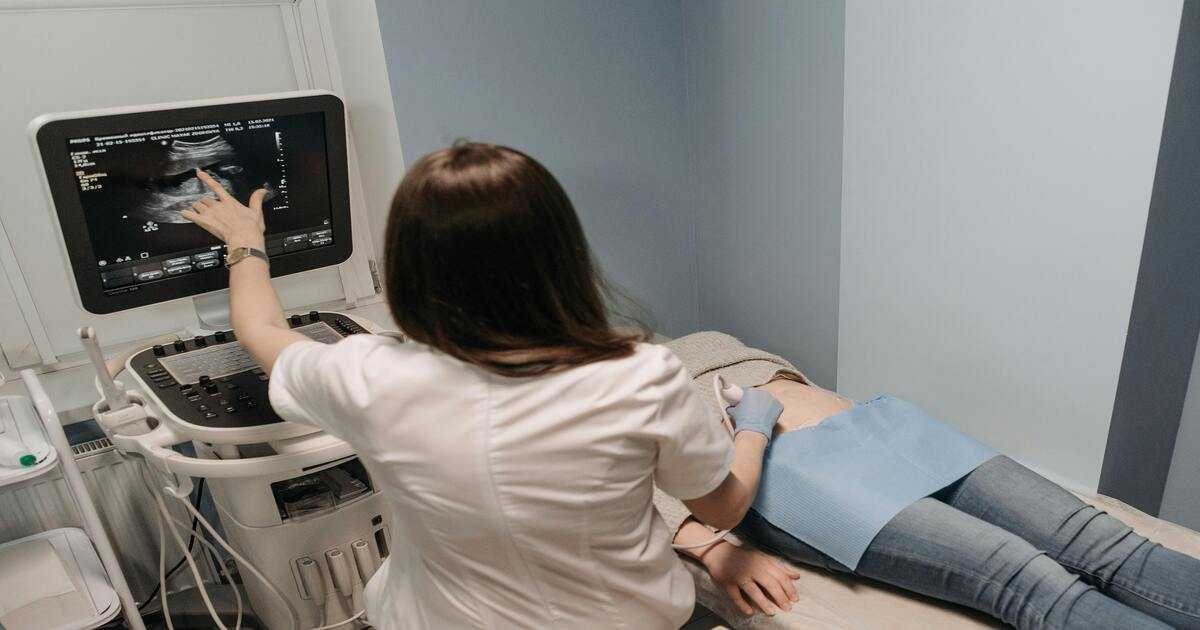
When women experience long-term, unexplained lower abdominal pain, severe menstrual cramps, painful intercourse, or infertility, they should seek help from a gynecology and reproductive medicine specialist early. Since endometriosis symptoms are easily confused with other gynecological conditions, accurate diagnosis is especially important. Common diagnostic methods include the following 4:
1. Palpation
During the initial examination, doctors perform a pelvic exam via the vagina or rectum to understand abnormalities within the pelvic cavity. In patients with endometriosis, findings may include nodules and tenderness in the uterosacral ligaments, tenderness in the rectouterine area, ovarian masses, fixed adhesions of the ovaries or cervix, and general abdominal or pelvic tenderness.
2. Ultrasound
Ultrasound is a safe, quick, and relatively non-invasive imaging method. It effectively helps assess the condition of the uterus and ovaries, including diagnosing endometriomas (chocolate cysts) and adenomyosis.
3. Blood test (CA-125 Index)
CA-125 levels in the blood rise when body tissue is damaged or abnormally proliferating. Normally, CA-125 levels should be below 35 u/ml. If levels exceed 35 u/ml, doctors will further evaluate whether it may be related to conditions such as endometriosis, pelvic inflammation and adhesions, adenomyosis, or ovarian cancer.
However, CA-125 is not a definitive diagnostic marker — some patients with mild endometriosis may still have blood test results within the normal range. That said, for patients already diagnosed, CA-125 can serve as a reference for tracking disease changes and treatment progress, helping doctors assess treatment response and disease trajectory.
4. Laparoscopy
Laparoscopy is the most direct and precise way to assess endometriosis. Through this examination, doctors can clearly observe whether ectopic endometrial nodules, abnormal masses, abnormal cysts, or dark red or black blood deposits are present within the pelvic cavity.
Can Endometriosis Be Cured? What Are the Treatment Options?
So, can endometriosis be cured? Is surgery always necessary? While endometriosis is a chronic condition, appropriate treatment can improve symptoms and improve quality of life. Common treatment options include:
1. Medication
Treatment for endometriosis usually starts with conservative medication, primarily to improve symptoms such as menstrual pain and heavy menstrual bleeding, using traditional anti-inflammatory painkillers and hormonal medications (oral contraceptives, oral progestins), among others.
2. Surgical treatment
When medication is not effective, or the condition is more severe, doctors may recommend surgical treatment. Surgical treatment can be divided into conservative surgery (removing only the endometriosis lesions) and definitive surgery (removing the entire affected tissue).
Conservative surgery is typically suitable for patients with a smaller area of lesions. Its advantage is that it preserves reproductive organs as much as possible, but the drawback is that lesions cannot be completely removed, carrying a risk of recurrence after surgery.
If the lesions affect specific organs, such as the ovaries, fallopian tubes, or uterus, definitive surgery is needed to remove these organs as well — for example, in severe cases of chocolate cysts, the affected ovary may be removed. While this type of surgery significantly reduces the risk of recurrence, it also reduces fertility, so it is generally only recommended for women who have completed childbearing, have no plans to have children, or have already reached menopause.
3. Fertility planning and infertility treatment
If you have endometriosis and wish to conceive, it is recommended to consult a reproductive specialist to discuss whether assisted reproductive technologies such as IUI or IVF should be pursued before surgical treatment, in order to achieve pregnancy at the optimal time.
Is IVF Beneficial for Women with Endometriosis?

Pregnancy is often not straightforward for women with endometriosis. When lesions affect the ovaries, fallopian tubes, or cause pelvic inflammation and adhesions, the chances of successful fertilization and embryo implantation may both decrease. Women under 35 who have tried to conceive naturally for one year without success can consider consulting a specialized reproductive endocrinology and gynecology physician about in vitro fertilization (IVF) to help achieve pregnancy.
The advantage of IVF is that it can help avoid factors such as blocked fallopian tubes or pelvic adhesions, and allows selection of higher-quality embryos for transfer, which helps improve the chances of success. According to clinical experience, as long as ovarian function is reasonably adequate and the uterine lining condition is stable, even patients with moderate to severe endometriosis may still have the chance to successfully conceive through IVF.
That said, some women may still not succeed even after multiple IVF cycles — in such cases, further evaluation is needed to determine whether other factors are involved, such as declining ovarian function, chromosomal abnormalities in embryos, or an unfavorable implantation environment.
For cases of recurrent implantation failure, doctors may recommend preimplantation genetic testing for aneuploidy (PGT-A) to help select embryos with normal chromosomes and higher developmental potential, further improving the chances of successful pregnancy. If you are on the journey of trying to conceive, you're welcome to consult TFC Taipei Fertility Center, where our professional team can create a personalized plan based on your health condition, supporting you every step of the way toward a healthy baby.