












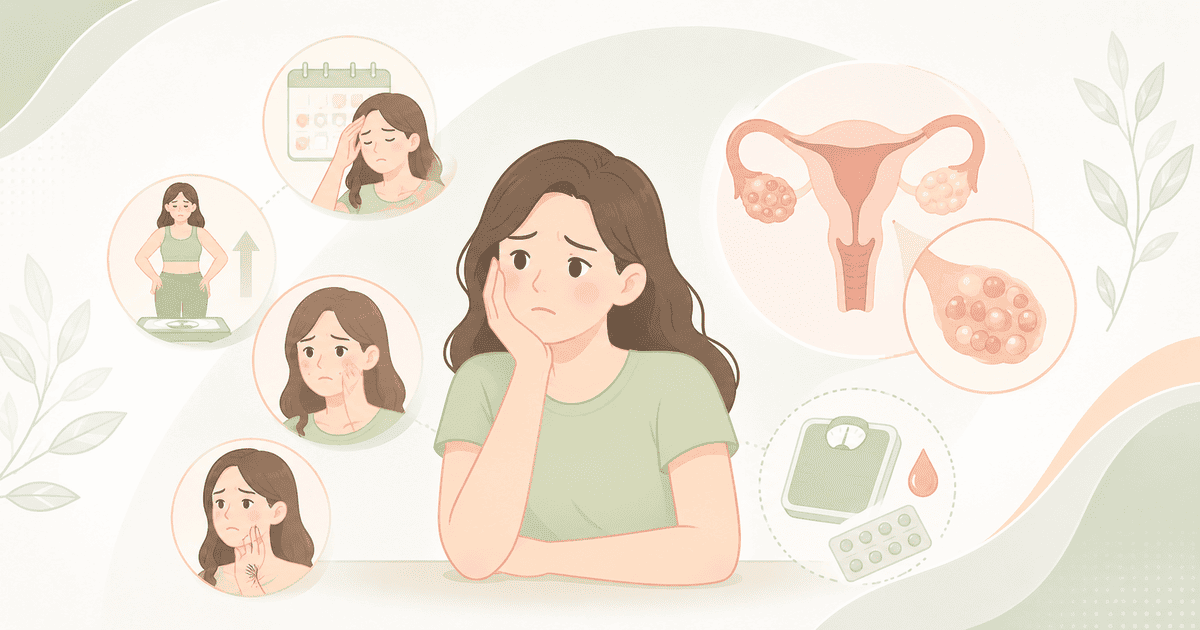
Polycystic Ovary Syndrome (PCOS), renamed Polyendocrine Metabolic Ovarian Syndrome (PMOS) in 2026, is a common endocrine condition among women of reproductive age. It is closely linked to ovulation, the chances of conception, and long-term metabolic health.
Many women develop irregular periods, weight gain, acne, or excess hair growth during adolescence or early adulthood without realizing these may be warning signs of PMOS.
Starting from real clinical cases, and drawing on the international diagnostic consensus and the clinical experience of TFC Taipei Fertility Center, this article explains the symptoms, causes, effects, and treatment of PMOS. It also helps you answer the questions "Does PMOS go away? Can I still get pregnant?"
Case Study: A Young Woman with Fewer Than 6 Periods a Year, Diagnosed with PMOS
A 22-year-old woman came in because of long-term irregular periods (fewer than 6 per year). Her first period was at age 11. From ages 13 to 14, she began to develop:
- Recurrent acne
- Coarse, dark body hair and fine hair growing above the upper lip
- Weight gain year after year, with a BMI above 24 (in the overweight range)
Blood tests showed elevated testosterone. Based on her clinical symptoms and test results, she was diagnosed with PMOS (formerly PCOS). Cases like this are not uncommon in clinical practice, and without proper follow-up and treatment, they may affect future fertility and metabolic health.
What Is PMOS (Formerly PCOS)?
PMOS is an ovarian condition linked to endocrine and metabolic imbalance. It is often associated with the following mechanisms:
Insulin resistance is one of the key causes. Insulin resistance means the body needs to produce more insulin to move blood sugar into cells.
- High insulin levels stimulate the ovaries to produce more androgens (male hormones)
- This in turn suppresses normal ovulation, creating a vicious cycle in PMOS
How Common Is PMOS?
- It affects about 4–8% of women of reproductive age
- Under the Rotterdam criteria, the prevalence can be as high as 18%
- Clinical presentation also varies by body type and population
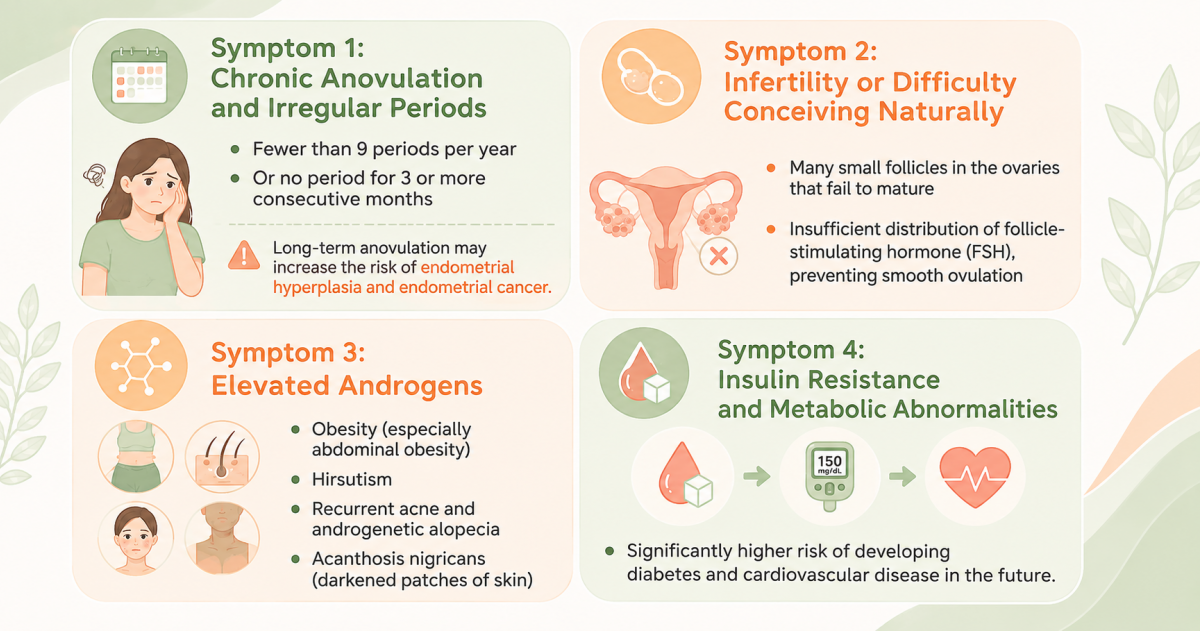
Does PMOS Go Away? Common Symptoms and Warning Signs
What Causes PMOS?
Researchers currently believe PMOS results from the interaction of genetic predisposition and acquired metabolic factors, including:
- Insulin resistance
- Elevated androgens
- An abnormal ovarian response to gonadotropins
TFC reminds you that PMOS is not an incurable condition. It is a chronic condition that can be managed over the long term.
How Is PMOS Diagnosed?
A diagnosis can be made when two of the following three criteria are met (after other conditions have been ruled out):
- Ovulatory dysfunction: infrequent periods or no periods
- Elevated androgens: confirmed by clinical signs or blood tests
- Polycystic ovarian morphology on ultrasound: small follicles arranged in a "string of pearls" pattern in the ovaries
What Long-Term Effects Can PMOS Have?
Besides infertility, PMOS is also associated with an increased risk of the following conditions:
- Diabetes
- Endometrial abnormalities and endometrial cancer
- Fatty liver disease
- Cardiovascular disease
TFC reminds you that if you are not planning to conceive for now, managing your cycle regularly is very important.
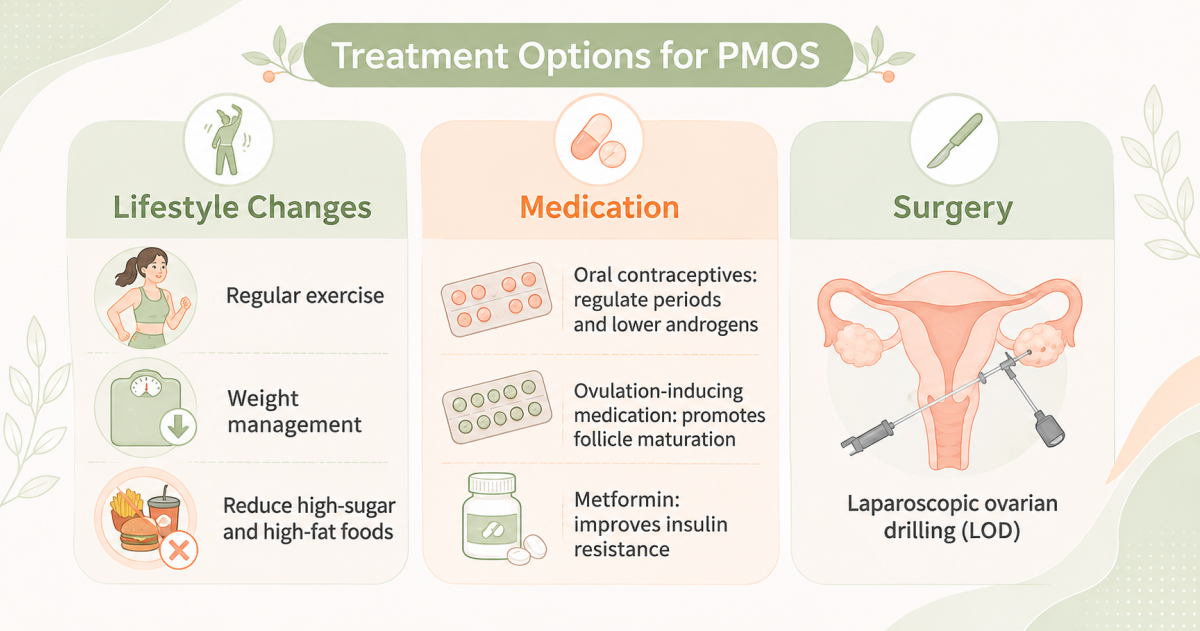
PMOS Treatment Options
What If You Have PMOS and Want to Get Pregnant?
Natural and Medication-Assisted Ovulation Induction
- Clomiphene citrate
- Injectable ovulation medication
Assisted Reproductive Technology
- Intrauterine insemination (IUI)
- In vitro fertilization (IVF)
Read more: What Is IVF? Why Take Progesterone? IVF FAQs Explained
Success Story: PMOS and 2 Years of Infertility, Healthy Baby Born After Low-Dose Stimulation and IVF
Ms. Hsu, 35, had been struggling with infertility for over two years. After several unsuccessful intrauterine insemination (IUI) attempts, she decided to move on to IVF. After evaluation by a TFC physician, and given her more than two years of infertility and PMOS, she was given a very low dose of injectable ovulation medication. At egg retrieval, 23 eggs were collected, and embryo development was very good. The embryos were cultured to the blastocyst stage (Day 5), and all blastocysts were frozen.
In her next cycle, two top-grade thawed blastocysts were transferred. She became pregnant and, at just over 37 weeks, gave birth to a healthy baby weighing 3,172 grams.
TFC Taipei Fertility Center: Supporting You in Managing PMOS and Planning Your Family
TFC offers:
- Comprehensive PMOS evaluation
- Targeted ovulation and hormone treatment
- One-stop assisted reproduction care
- A team of physicians, embryologists, and nutrition support specialists
Does PMOS go away? It can be managed, and many women with PMOS are able to conceive. If you have questions, book a consultation today.
PMOS (Formerly PCOS) FAQ
Q1: Does PMOS go away?
A: PMOS cannot be "cured," but it can be managed over the long term. With lifestyle changes, medication, and regular follow-up, many women are able to resume ovulation, improve irregular periods, and lower their risk of infertility and metabolic disease.
Q2: Does PMOS always cause infertility?
A: Not necessarily. PMOS is one of the most common causes of ovulation disorders in women, but with ovulation medication, intrauterine insemination (IUI), or in vitro fertilization (IVF), many women with PMOS are able to conceive.
Q3: What are the typical symptoms of PMOS?
A: Common symptoms include irregular periods, chronic anovulation, acne, excess hair growth, weight gain, and elevated androgens. Some patients also have insulin resistance, which raises the risk of developing diabetes and cardiovascular disease later in life.
Q4: Do I have to take medication for PMOS?
A: Whether you need medication depends on whether you want to conceive and how severe your symptoms are. If you are not planning to conceive for now, oral contraceptives or progesterone are often used to regulate periods. If you are trying to conceive, ovulation medication or assisted reproductive technology may be used.
Q5: Can I get pregnant naturally with PMOS?
A: Some patients are able to conceive naturally after weight management and medication adjustments. If ovulation remains irregular, your doctor may recommend ovulation medication, IUI, or IVF depending on your situation, which may support a better chance of conception.
Q6: What tests are needed for PMOS?
A: Common tests include blood tests for androgens, an ultrasound to examine the ovaries, and an assessment of your periods and ovulation.
Q7: What happens if PMOS is left untreated?
A: Long-term lack of treatment may increase the risk of infertility, endometrial abnormalities, diabetes, fatty liver disease, and cardiovascular disease. Even if you are not planning to conceive for now, regular treatment and follow-up are recommended.