













More and more couples are facing fertility challenges, and sperm health is a key factor affecting male fertility. According to recent research, sperm count and quality among men worldwide have been declining year by year. Lifestyle habits, environmental pollution, and other factors may also be quietly contributing to low sperm motility and poorer sperm health. Want to learn more about what causes low sperm motility and how to improve your chances of conceiving? Start by understanding the key indicators of sperm health!
Is Your Sperm Healthy? Understanding Your Semen Analysis Report
Semen analysis is one of the core tests for diagnosing male infertility. It provides detailed data on sperm health, helping men understand their fertility status.
Why is semen analysis necessary? Medical data suggests that male factors, such as abnormal sperm count, motility, or morphology, are involved in roughly 50% of infertility cases. If a couple has been trying to conceive for one year without success and without using contraception, the male partner is advised to have a semen analysis first. Compared with tests for the female partner, such as hysterosalpingography (HSG) and hysteroscopy, semen analysis is simpler and non-invasive, and it quickly provides key information.
Semen analysis involves collecting a semen sample and testing it in detail in a laboratory. The complete process includes:
- Preparation: Abstain from ejaculation for 2–7 days, but no longer than 7 days, to ensure sample quality and accurate results.
- Sample collection: Collect the semen sample in a sterile container by masturbation. Do not use condoms or lubricants.
- Delivery: The sample must reach the laboratory within 1 hour and be kept at room temperature throughout.
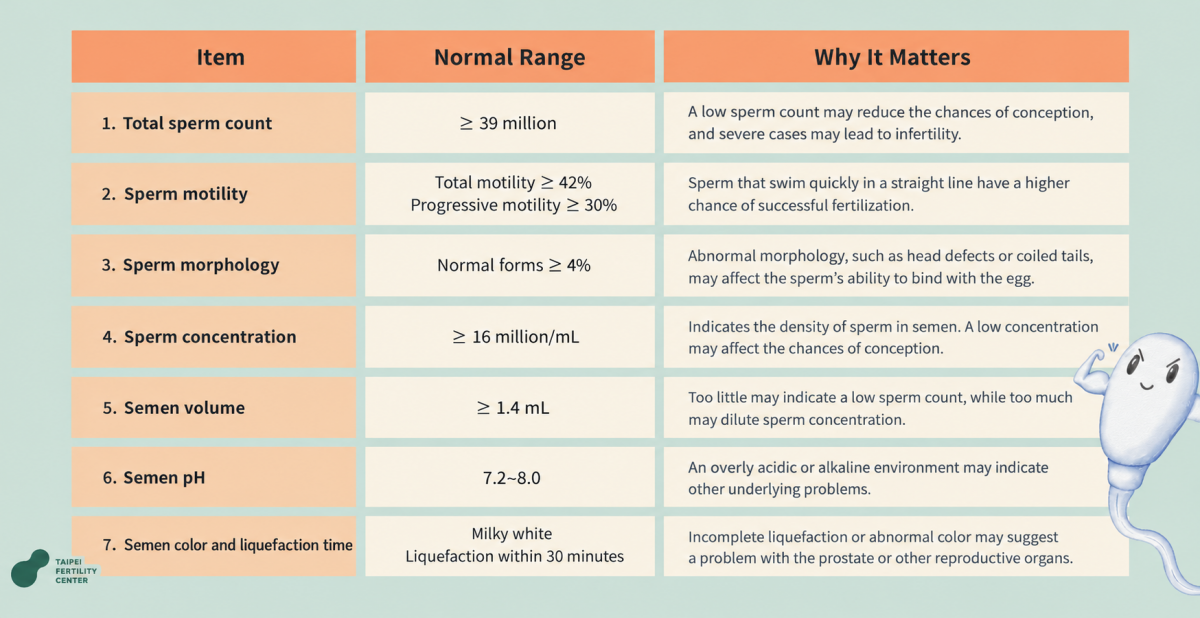
- Results: Results are available the same day, and a physician will interpret them based on the data below.
What Is a Normal Sperm Count? Sperm-Damaging Habits to Avoid!
When sperm count is low or sperm quality declines, the chances of conception may be significantly reduced. Understanding the normal sperm count range and avoiding habits that harm sperm are the first steps toward better reproductive health!
According to the World Health Organization (WHO) 2021 Laboratory Manual for the Examination and Processing of Human Semen (6th edition), a healthy man’s sperm count should meet the following reference values:
- Sperm concentration: At least 16 million sperm per milliliter of semen.
- Total sperm count: At least 39 million sperm per ejaculate.
If sperm concentration is below 15 million/mL or the total sperm count is below 39 million, it is classified as oligospermia. When sperm concentration falls below 5 million per milliliter of semen, it may be diagnosed as severe oligospermia, which can seriously affect the chances of natural conception.
Low sperm count or declining sperm quality not only directly affects fertility but may also be a warning sign of underlying health problems. The causes may come from lifestyle habits, environmental factors, and health conditions:

Poor Lifestyle Habits
- Staying up late and excessive stress: Chronic sleep deprivation or a high-pressure environment can interfere with testosterone production and reduce sperm production. Excessive stress may also harm testicular health and further lower fertility.
- Prolonged sitting: Sitting for long periods can restrict blood circulation to the testicles and reduce the efficiency of sperm production.
Smoking and Drinking
- Smoking: Nicotine in cigarettes can damage the cells that produce sperm, leading to a lower sperm count and a higher risk of abnormal sperm morphology.
- Heavy drinking: Alcohol can damage testicular cells, lower testosterone levels, and affect sperm production and quality, which may make conceiving more difficult.
Environmental Factors
- Heat exposure: The testicles are highly sensitive to temperature. Soaking in hot springs for long periods or resting a laptop on the lap can raise local temperature and may suppress sperm production.
- Exposure to endocrine-disrupting chemicals: Long-term exposure to endocrine-disrupting chemicals such as bisphenol A (BPA), found in plastic products, can interfere with the male endocrine system and may reduce sperm count and quality.
Health Conditions and Diseases
- Conditions such as cryptorchidism (undescended testicles), testicular injury, varicocele, low testosterone, chronic illnesses, and hormonal imbalances can all affect the efficiency and quality of sperm production.
Medications
- Chemotherapy drugs, certain antibiotics (such as sulfonamides), and anabolic steroids (used for muscle building) may all have adverse effects on sperm production.
Unhealthy Diet
- High-fat diet: Consuming too many trans fats (such as those in fried foods) can affect male hormone secretion and hinder sperm production.
- Nutrient deficiencies: Insufficient zinc, vitamin C, and vitamin E can increase free radical damage to sperm, which may reduce sperm count and motility.
Prolonged Cycling (More Than 10 Hours per Week)
Prolonged pressure on the scrotum while cycling can raise local temperature and restrict blood circulation, which may affect sperm production efficiency and motility.
What Causes Low Sperm Motility? Ways to Improve Sperm Quality!
Sperm motility refers to the ability of sperm to swim, including their direction and speed. When sperm motility is low, even if the sperm count is within the normal range, sperm may not be able to reach the fallopian tube and fertilize the egg. According to World Health Organization (WHO) standards, healthy semen should meet the following motility benchmarks:
- Total motility: More than 42% of sperm should be motile (including both progressive and non-progressive movement).
- Progressive motility: At least 30% of sperm should move forward in a straight line at a fast or moderate speed.
If sperm motility falls below these standards, the risk of infertility may increase. So what causes low sperm motility? The causes are usually similar to those of a low sperm count, including poor lifestyle habits, heat exposure, an unbalanced diet, unhealthy habits, and medical conditions.
How can you improve sperm quality and motility? Improving sperm quality requires a combination of diet, lifestyle, and environmental factors. Here are a few practical ways to help improve sperm quality and motility:
Sperm-Supporting Diet
- Zinc: Zinc is an essential mineral that supports sperm metabolism and production. Try eating more zinc-rich foods such as oysters, beef, and pumpkin seeds. The recommended intake is 30 mg per day.
- Vitamins E and C: These antioxidants may help reduce free radical damage to sperm and support sperm vitality. Vitamin E can be found in nuts, and vitamin C in citrus fruits.
- Arginine: Arginine is an important component of sperm protein and may help improve sperm motility. Sources include eel, sea cucumber, and nuts. The recommended intake is 1–4 g per day.
Avoid Heat Exposure
- Cut down on saunas and hot baths, and avoid staying in hot environments for long periods.
- Choose breathable, loose-fitting clothing to help maintain a suitable scrotal temperature.
- When using a laptop, avoid resting it on your lap for long periods.
Exercise Regularly
- Do aerobic exercise such as jogging or swimming at least 3 times a week, 30 minutes each time, to help promote blood circulation and improve the environment for sperm production.

Maintain a Regular Routine
- Aim for 6–8 hours of sleep each night to help support hormone production and the body’s recovery.
- Manage stress through meditation or deep breathing to help reduce its negative effects on testicular function.
Quit Smoking and Drinking
Nicotine and excessive alcohol can damage sperm cells and affect motility. Men who are planning to have children are advised to quit smoking and drinking as early as possible to help protect the integrity of their sperm cells.
Avoid Taking Medications Without Medical Advice
Long-term use of high-dose steroids, antibiotics, and other medications may affect sperm metabolism. Men who are planning to have children are advised to talk with a doctor before taking any medication to ensure it is safe.
Choose TFC Taipei Fertility Center to Help Improve Your Sperm Count and Motility!

Modern life’s stress and environmental influences mean more and more families are facing fertility challenges. Whether you are looking for answers to a conception problem or hoping to improve your chances of pregnancy with professional advice, TFC Taipei Fertility Center is a choice you can trust.
TFC Taipei Fertility Center is led by the “Father of IVF” and staffed by a highly experienced medical team whose physicians have an average of more than 20 years of experience. With deep expertise in the diagnosis and treatment of infertility, the team provides comprehensive infertility consultations and testing for every couple and designs a treatment plan tailored to each individual’s circumstances. Let us accompany you on this journey toward a hopeful future together.
Sperm Health and Semen Analysis FAQ
Q1: What is a semen analysis? Is it necessary?
A semen analysis is a core test for assessing male fertility. It evaluates sperm count, motility, and morphology. Male factors are involved in roughly 50% of infertility cases, so if you have been trying to conceive for one year without success, a semen analysis is recommended as a first step.
Q2: How many days should I abstain before a semen analysis?
Abstaining for 2–7 days is recommended. An abstinence period that is too short or too long may affect sperm count and motility and reduce the accuracy of the test.
Q3: What is a normal sperm count?
According to WHO 2021 standards, sperm concentration should be ≥16 million/mL and total sperm count should be ≥39 million per ejaculate. Values below these standards may affect the chances of natural conception.
Q4: Can I still conceive naturally with low sperm motility?
It is still possible, but the chances of conception may be lower. If motility remains low over time, it is recommended to combine lifestyle changes with a professional evaluation of treatment options.
Q5: What are the common causes of low sperm motility?
Common causes include staying up late and stress, smoking and drinking, heat exposure, nutrient deficiencies, varicocele, and chronic illnesses.
Q6: Which lifestyle habits are most likely to harm sperm?
Habits such as chronic sleep deprivation, smoking, excessive drinking, prolonged sitting, soaking in hot springs for long periods, and cycling for long hours may all affect sperm quality.
Q7: What foods may help improve sperm motility?
Zinc, vitamin C, vitamin E, and arginine may support sperm production and motility. They can be found in oysters, nuts, citrus fruits, and high-quality protein.
Q8: How long does it take to improve sperm quality?
The sperm production cycle takes about 72–90 days, so it usually takes 2–3 months of lifestyle and diet changes before improvements show up in test results.
Q9: If my semen analysis is abnormal, do I definitely need IVF?
Not necessarily. It depends on the degree of abnormality and your partner’s condition. In some cases, lifestyle improvements, medication, or intrauterine insemination (IUI) may help achieve pregnancy.
Q10: When should I visit a fertility center for an evaluation?
If your semen analysis is abnormal on multiple occasions, if you have been trying to conceive for one year without success, or if you have a history of conditions such as varicocele, it is recommended to see a fertility center for an evaluation early.
Read more:
What Is IVF? Why Take Progesterone? Common IVF Questions Answered!
How Much Does IUI Cost? Understanding the Disadvantages of IUI and Tips for Success