













You've been trying to conceive for a while. Your wife's test results all come back normal, and your routine semen analysis shows good count and strong motility—yet good news still isn't coming? Or maybe you finally see two lines on the test, only to face the heartbreak of repeated miscarriage or missed abortion?
The problem may lie in a hidden factor that routine tests simply can't see: Sperm DNA Fragmentation (SDF).
This article will walk you through, in plain language, what sperm DNA fragmentation is, what causes it, how to read the crucial DFI (DNA Fragmentation Index), and how TFC Taipei Fertility Center uses cutting-edge AI technology and sperm selection devices to help you overcome obstacles on your path to conception.
Looking "Good" Doesn't Mean Being "Good Inside"! What Is Sperm DNA Fragmentation?
When people hear the term "sperm DNA fragmentation," they often mistakenly assume it refers to a sperm's outward appearance being damaged or broken. In fact, it refers to damage in the structure of the genetic material (DNA) carried in the sperm head—specifically, single-strand or double-strand breaks.
-
Traditional semen analysis (count, motility, morphology): This is like checking a sperm's "appearance" and "running speed."
-
Sperm DNA fragmentation testing: This goes deeper, examining what's "on the inside."
Even if a sperm swims fast and looks great—even if it successfully fertilizes an egg and forms an embryo—if its DNA itself contains breaks or fractures, the embryo is prone to stalling during development, which can lead to repeated miscarriage or repeated IVF failure. About 15% of infertile men have sperm that appear completely normal on standard testing, yet have damaged DNA underneath.
The "Culprits Behind the Scenes": What Causes Sperm DNA Fragmentation
The core cause of sperm DNA breakage is excessive oxidative stress in the body and the buildup of reactive oxygen species (ROS). Common triggering factors include:
-
Lifestyle killers: Chronic sleep deprivation, high work-related stress, smoking, and excessive alcohol consumption. In addition, obesity can lead to hormonal imbalances, while wearing overly tight pants or prolonged sitting can raise scrotal temperature.
-
Advanced paternal age: As men age, the integrity of sperm DNA tends to decline as well.
-
Environmental toxins: Prolonged exposure to high heat, radiation, plasticizers, bisphenol A (BPA), or severe air pollution.
-
Disease and medical treatment: Inflammation or infection of the reproductive system (such as urinary tract infections), varicocele, or a history of chemotherapy or radiation therapy.
According to clinical guidelines, sperm DNA fragmentation testing is recommended for the husband when a couple meets any of the following conditions (after female factors have been ruled out):
-
Experiencing unexplained infertility.
-
Recurrent miscarriage (two or more consecutive losses) or repeated implantation failure with IVF.
-
Poor results on routine semen analysis (low sperm count, poor motility, or abnormal sperm morphology).
-
Abnormally low fertilization rates, excessive embryo fragmentation, or developmental delay in embryos from a previous IVF cycle.
-
The husband is over 40 years old or obese (BMI ≥ 30).
-
A confirmed diagnosis of varicocele, where surgical evaluation is being considered.
Key Data: Sperm DFI Classification Table
After testing, you'll receive a key figure—DFI (DNA Fragmentation Index)—which represents the percentage of sperm with damaged genetic material. The classification is as follows:
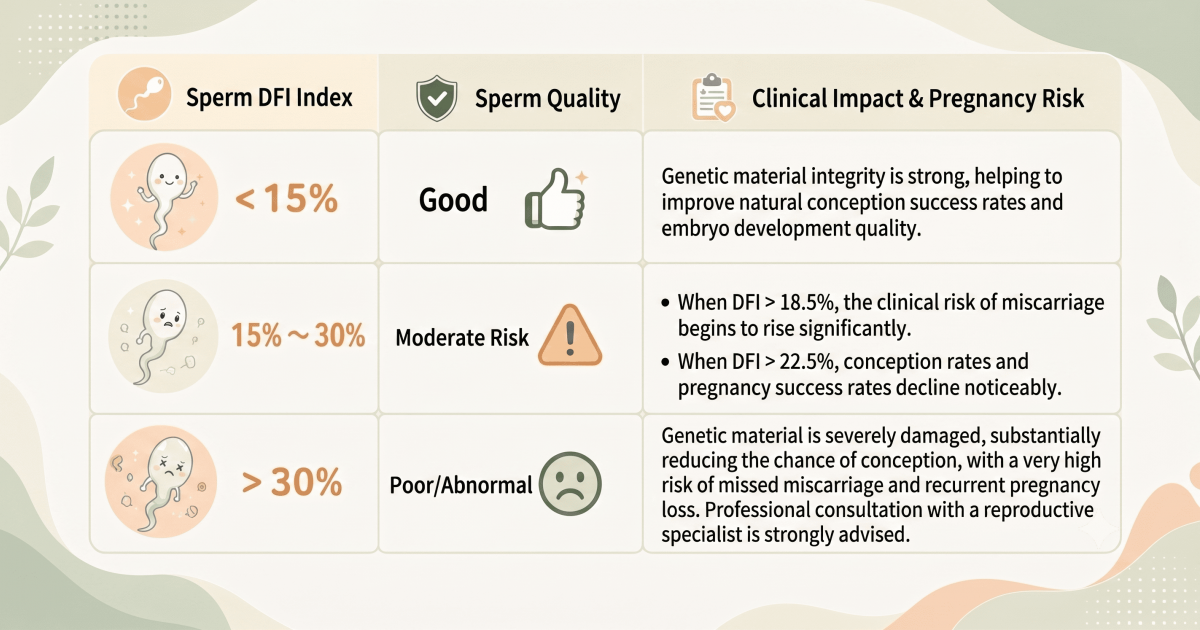
Clinical evidence note: According to research by Wiweko et al., men with sperm DFI ≥ 26.1% face an infertility risk 2.84 times higher than those with normal DFI levels.
How Is Sperm DNA Fragmentation Testing Done?
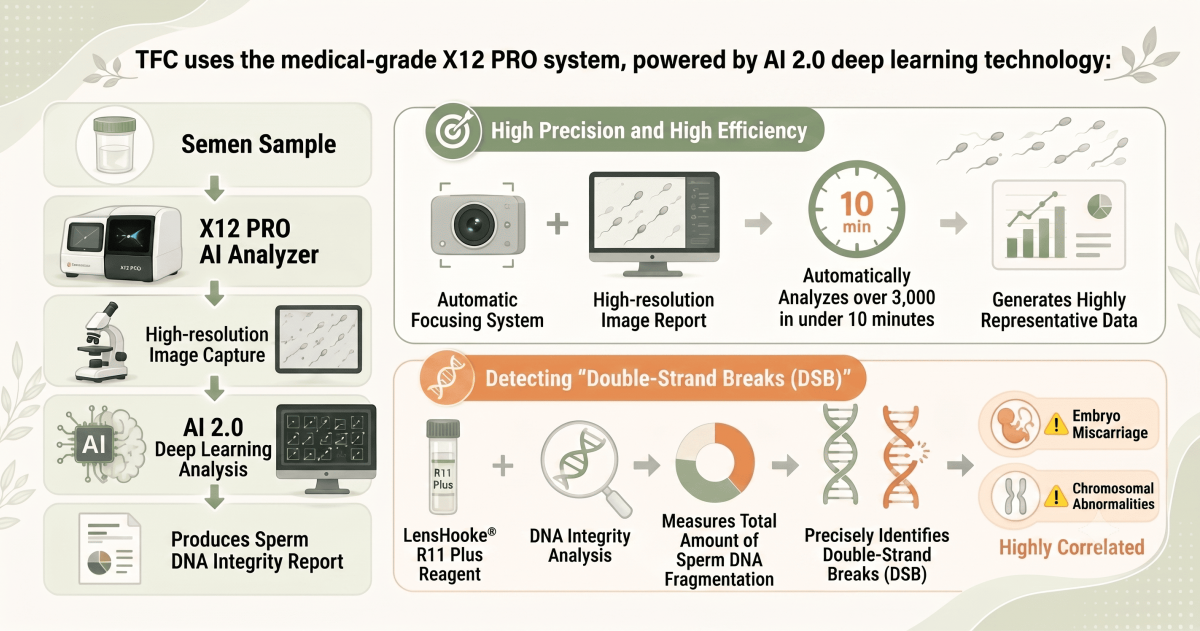
1. Computer-Assisted Sperm Analysis (CASA / AI 2.0 Analysis)
Traditional manual counting is prone to subjective bias during microscopic examination. TFC uses the medical-grade X12 PRO system, powered by AI 2.0 deep learning technology: High precision and high efficiency: The system features automatic focusing and high-resolution imaging reports, capable of automatically analyzing over 3,000 sperm in under 10 minutes, generating highly representative data.
Detecting "Double-Strand Breaks (DSB)": Combined with specialized advanced reagents (such as LensHooke® R11 Plus), the system can not only measure the total amount of fragmentation but also precisely analyze double-strand breaks (DSB)—the most problematic type, which is highly correlated with embryo miscarriage and chromosomal abnormalities.
2. The CA0 Sperm Selector and the ZyMōt Microfluidic Chip
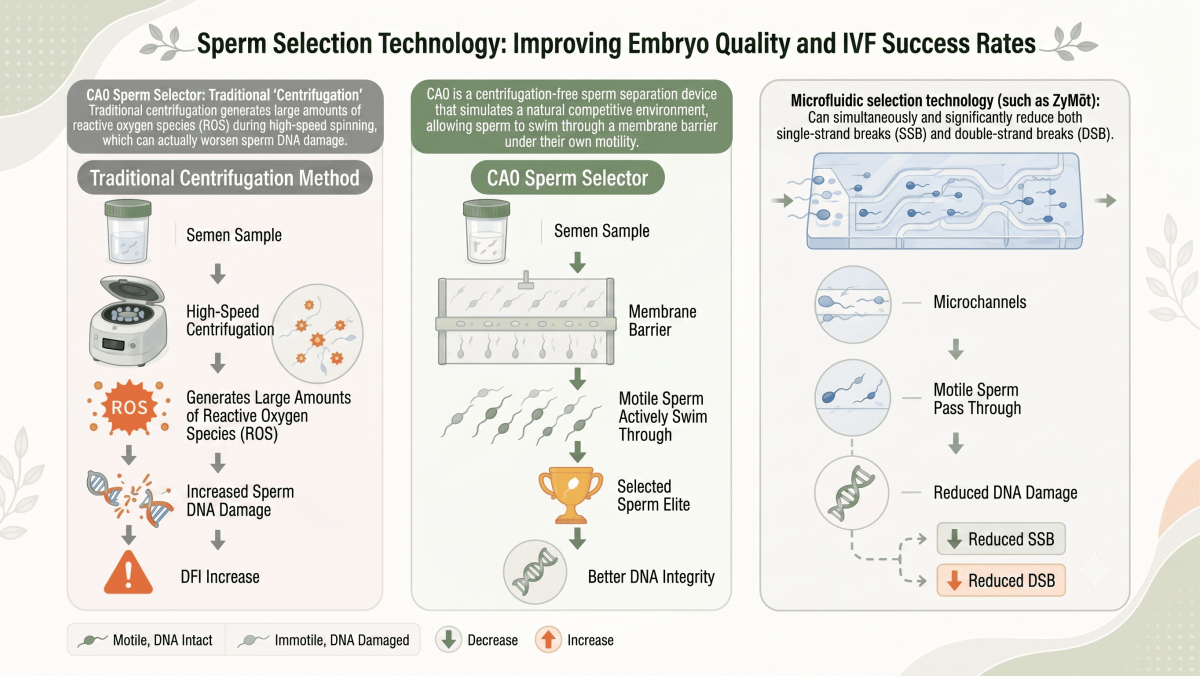
When a man's DFI is found to be elevated, how to select healthy sperm becomes critically important.
CA0 Sperm Selector: Traditional centrifugation generates large amounts of reactive oxygen species (ROS) during high-speed spinning, which can actually worsen sperm DNA damage. CA0 is a centrifugation-free sperm separation device that simulates a natural competitive environment, allowing sperm to swim through a membrane barrier under their own motility.
Microfluidic selection technology (such as ZyMōt): Can simultaneously and significantly reduce both single-strand breaks (SSB) and double-strand breaks (DSB).
Clinical advantages: Sperm selected through this technology—the "elite sperm"—not only show better morphology and motility, but also significantly lower DFI. This can meaningfully increase the embryo euploidy rate, reduce the proportion of mosaic embryos, and ultimately improve IVF success rates.
High Sperm DNA Fragmentation? Here Are 3 Ways to Improve It
Sperm is continuously being produced (with each full growth cycle taking about 2–3 months). This means there's a real opportunity to actively improve sperm quality through lifestyle and medical intervention—with noticeable improvement possible after about 3 months:
- Strategy 1: Adjust lifestyle habits. Quit smoking, limit alcohol, and lose weight if needed. Since sperm are extremely sensitive to heat, men should temporarily avoid high-temperature environments (such as hot springs, saunas, or prolonged sitting) and switch to loose, breathable underwear.
- Strategy 2: Supplement with antioxidants. Taking appropriate amounts of supplements that effectively combat oxidative stress—such as Coenzyme Q10 (CoQ10), Vitamin C, Vitamin E, zinc, and selenium—is recommended. DFI should be rechecked after 3 months of consistent supplementation.
- Strategy 3: Testicular Sperm Extraction (TESE) combined with Intracytoplasmic Sperm Injection (ICSI)
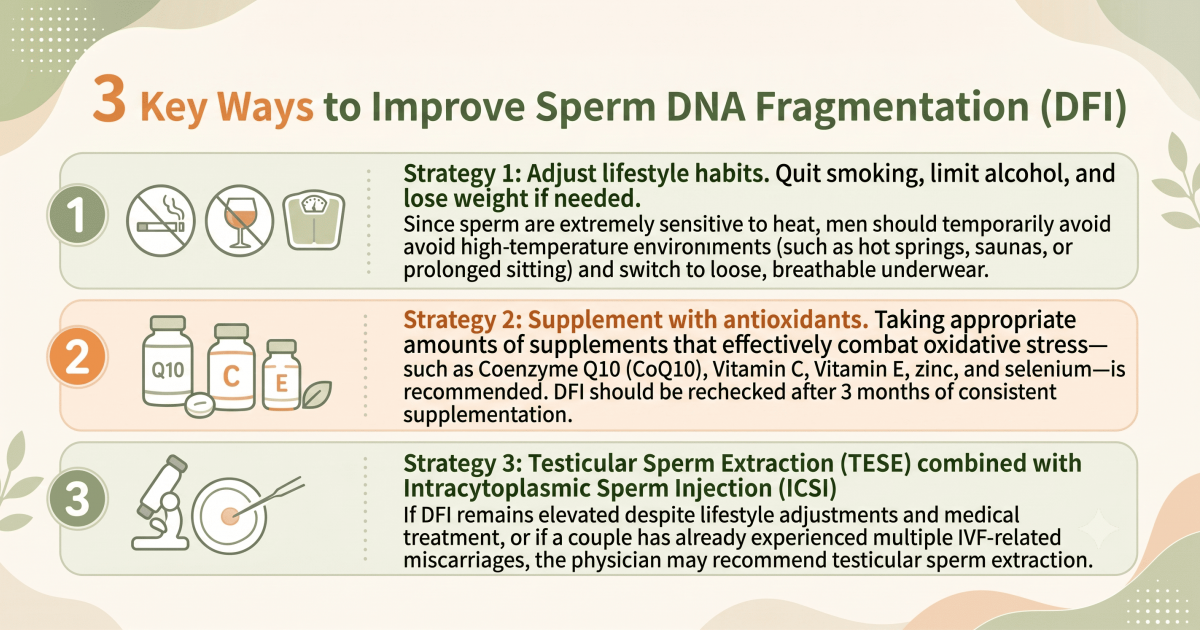
If DFI remains elevated despite lifestyle adjustments and medical treatment, or if a couple has already experienced multiple IVF-related miscarriages, the physician may recommend testicular sperm extraction.
Research has found that sperm are most vulnerable to oxidative damage as they travel from the testicle through the epididymis and vas deferens before ejaculation. Sperm retrieved directly from the testicle typically show a significantly lower DNA fragmentation rate than ejaculated sperm. Using this "more intact blueprint" of sperm directly, combined with ICSI, can substantially reduce the risk of recurrent miscarriage.
Frequently Asked Questions About Trying to Conceive
Q: If my sperm DNA fragmentation rate is high, is natural conception still possible?
A: If the DFI is only mildly to moderately elevated, natural conception is still possible, though the risk of subsequent missed miscarriage or pregnancy loss is relatively higher. We recommend starting with 3 months of lifestyle adjustments and antioxidant supplementation. If a follow-up test shows no improvement, it's best to seek reproductive medicine support as early as possible in order to make the most of the fertility window.
Q: If we're already planning to do IVF/ICSI, do we still need to worry about sperm DNA fragmentation?
A: While intracytoplasmic sperm injection (ICSI) can force fertilization between sperm and egg, if the sperm's DNA blueprint is already severely damaged, the resulting embryo can still easily stop developing between day 3 and day 5, or result in miscarriage after implantation. For this reason, testing in advance and using sperm selection technologies such as CA0 and ZyMōt to choose the healthiest sperm is the real key to improving the live birth rate.
A Sperm's "Inner Beauty" Matters Just as Much as Its Speed
Infertility is never the responsibility of one partner alone. In many cases, sperm DNA fragmentation is exactly the kind of overlooked piece of the puzzle that's been missing all along.
If you're currently facing obstacles on your path to conception, or preparing to begin an IVF cycle, we welcome you to schedule a consultation with TFC Taipei Fertility Center's professional medical team. Together, through precision medicine, we'll help identify the issue and build a customized treatment plan tailored to you—so you can move confidently toward a successful pregnancy.