












During an IVF (in vitro fertilization) treatment cycle, one of the most common questions from hopeful parents is: "What grade is my embryo? Is it developing well?" Should the embryo be cultured to Day 3 or Day 5? And what does a blastocyst grade like "4AB" actually mean?
TFC (Taipei Fertility Center) walks you through the key principles behind D3 and D5 embryo grading, how the right transfer timing is determined, and how time-lapse incubation technology helps embryologists select higher-quality embryos — supporting better implantation and pregnancy outcomes.
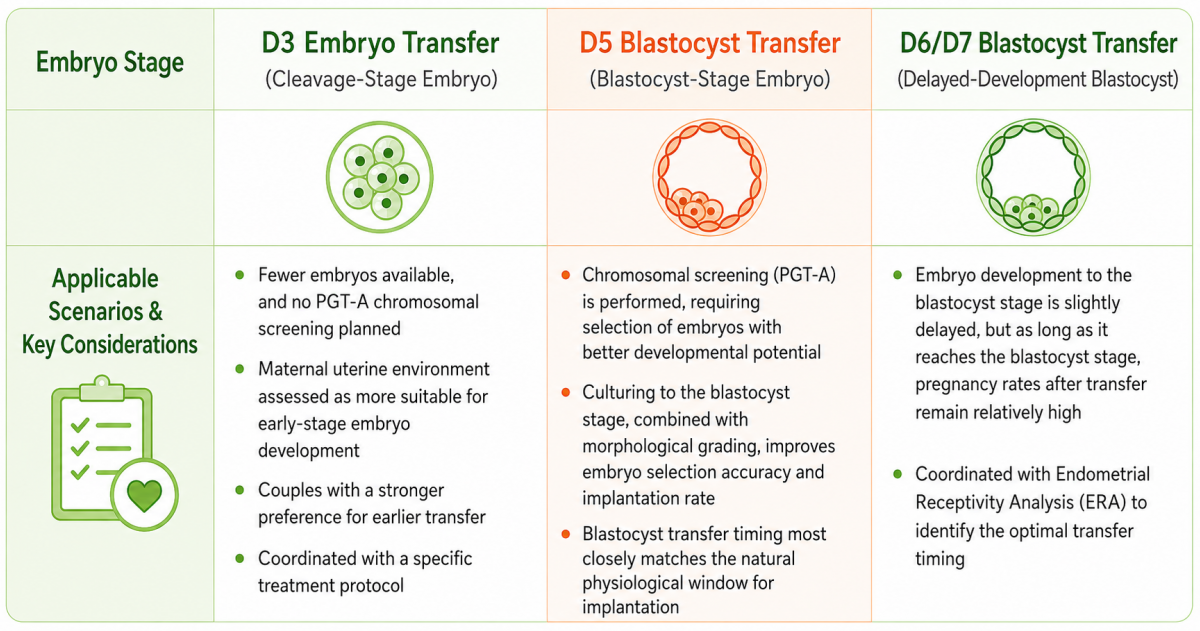
Should Embryos Be Cultured to D3 or D5/D6/D7? Key Considerations for Transfer Timing
The optimal culture duration and transfer timing for an embryo should be determined by the medical team based on a comprehensive assessment of the embryo's developmental progress, the condition of the uterine environment, and the capabilities of the reproductive laboratory. Below are the typical scenarios for embryos at different developmental stages:
How Are Embryos Graded? Learn How the Highest-Potential Embryos Are Selected
Suppose a couple has 10 embryos — the reproductive medical team doesn't select embryos for transfer at random. Throughout the culture process, embryologists assess each embryo using objective, clearly defined morphological criteria, which serve as an important reference for identifying embryos with higher developmental potential.
1. D3 Embryo Grading: Cell Uniformity and Fragmentation Rate
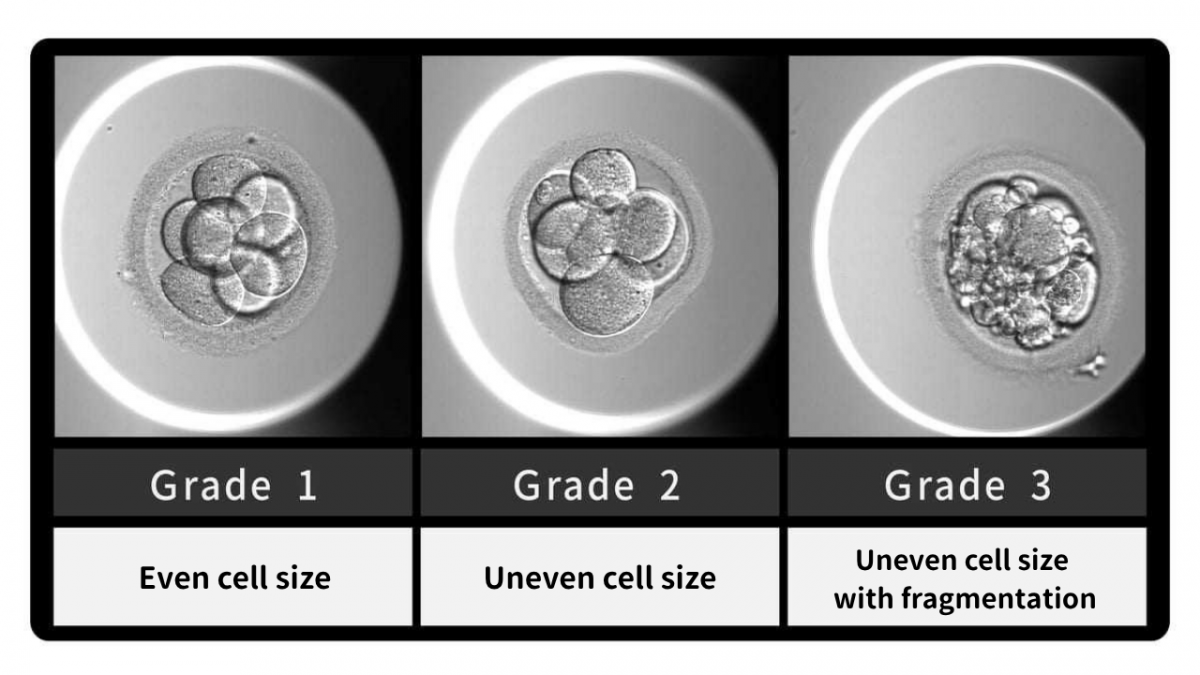
D3 embryo assessment focuses mainly on the uniformity of cell (blastomere) size and the degree of fragmentation:
- Key grading criteria:The more uniform the cell size and the lower the fragmentation, the higher the embryo quality is considered to be.
- Grade 1 (G1): Generally indicates the embryo with the strongest developmental potential and healthiest appearance, and is typically prioritized as the top candidate for transfer.
2. D5 Blastocyst Grading (e.g., 4AB): Breaking Down the Three Key Criteria
By Day 5, the embryo has developed into a more structurally complex blastocyst. Embryologists combine three separate criteria into a single grading code (for example, 4AB or 3CC):
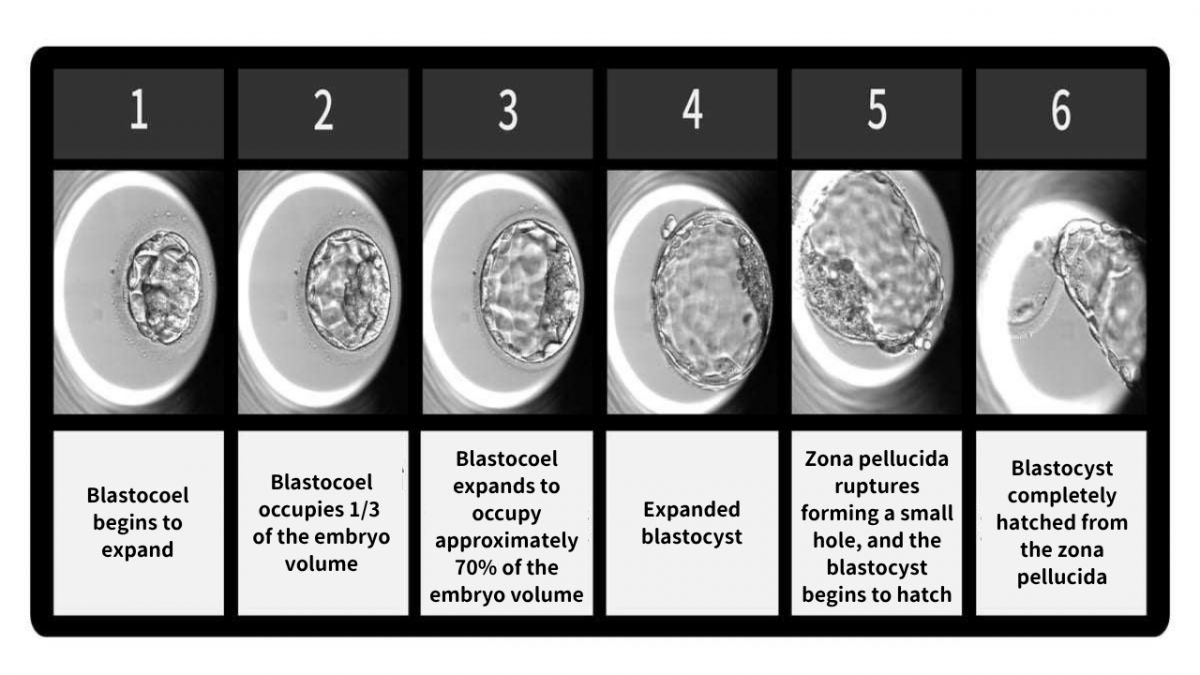
❶ First Character: Degree of Blastocyst Expansion (1–6)
This describes the size of the blastocoel (fluid-filled cavity) and how far development has progressed. A higher number indicates greater expansion — this reflects the developmental stage only, not an absolute measure of quality:
- 1–2:Early blastocyst; the blastocoel occupies half or less of the total embryo volume.
- 3–4:The blastocoel has fully expanded, and the embryo is beginning to prepare for hatching.
- 5–6:The blastocyst has begun breaking through the zona pellucida (outer shell) — either hatching or fully hatched.
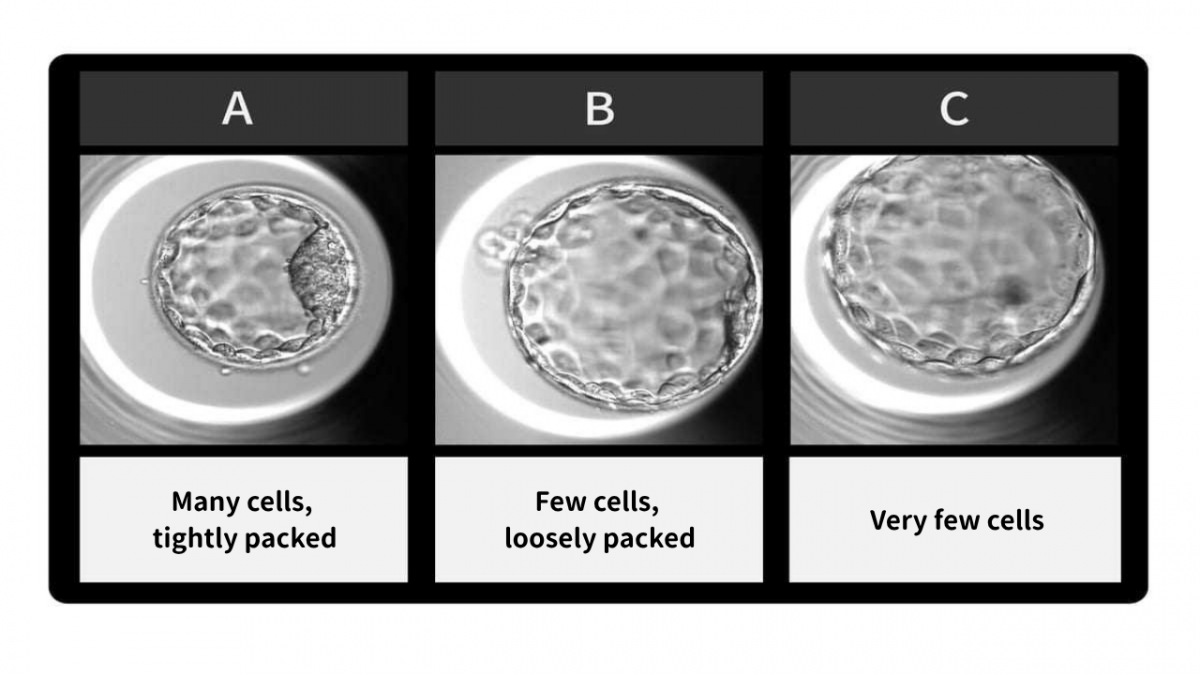
❷ Second Letter: Inner Cell Mass (ICM) Grade (A / B / C)
The inner cell mass is the group of cells that will go on to develop into the fetus itself, so its quality is especially important:
- Grade A:Numerous cells, tightly and compactly arranged (highest quality).
- Grade B: Fewer cells, more loosely arranged.
- Grade C: Very few cells present.
❸ Third Letter: Trophectoderm (TE) Grade (A / B / C)
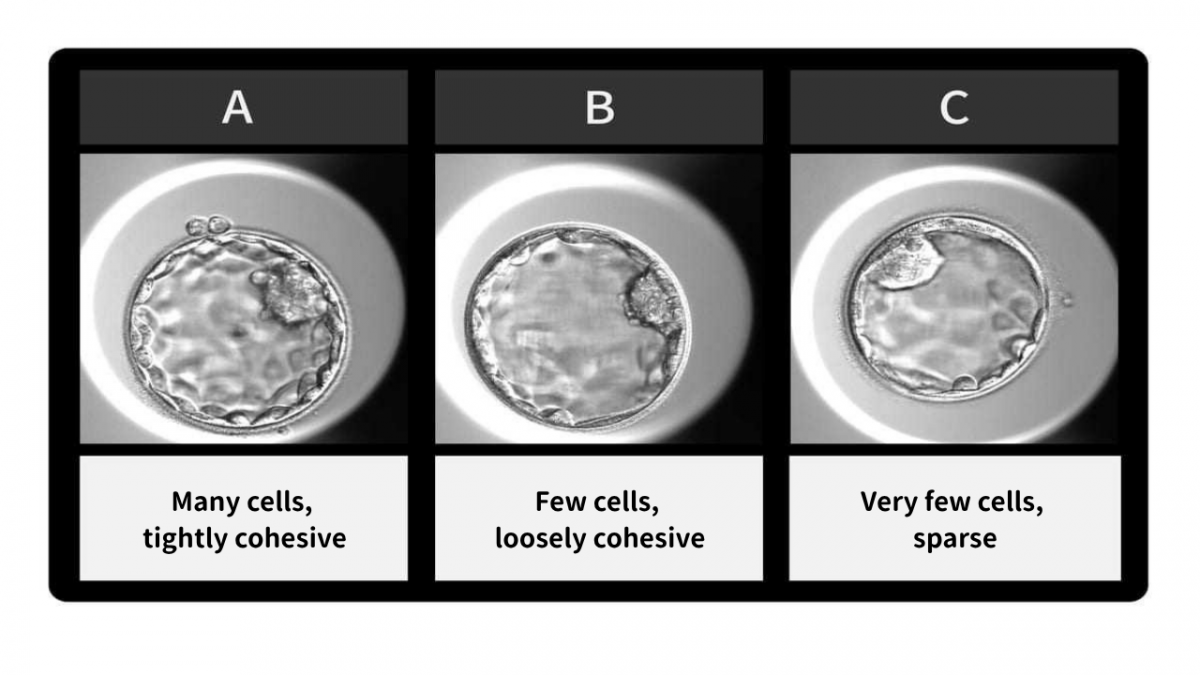
The trophectoderm cells are the outer layer that will go on to develop into the placenta, making this an important indicator for successful implantation:
- Grade A:Numerous cells, forming a tightly packed, cohesive epithelial layer.
- Grade B:Fewer cells, with a looser structural arrangement.
- Grade C:Few cells, irregularly arranged.
A Real-World Example: What Does "4AB" Mean?
-
4:The blastocyst has reached the mid-stage of development, with the blastocoel fully expanded.
-
A:The inner cell mass has a high cell count and is tightly packed — indicating excellent potential to develop into a healthy fetus.
-
B: The trophectoderm has a slightly lower cell count and a somewhat looser arrangement, but is still of good quality overall.
While embryo grading helps the reproductive medical team identify embryos with higher potential, embryos with lower grades can still result in a successful pregnancy and a healthy baby.
Grading serves as a clinical reference only. The final embryo transfer strategy should always be determined in consultation with your attending physician.
Advanced Embryo Culture Technology: Time-Lapse Incubation
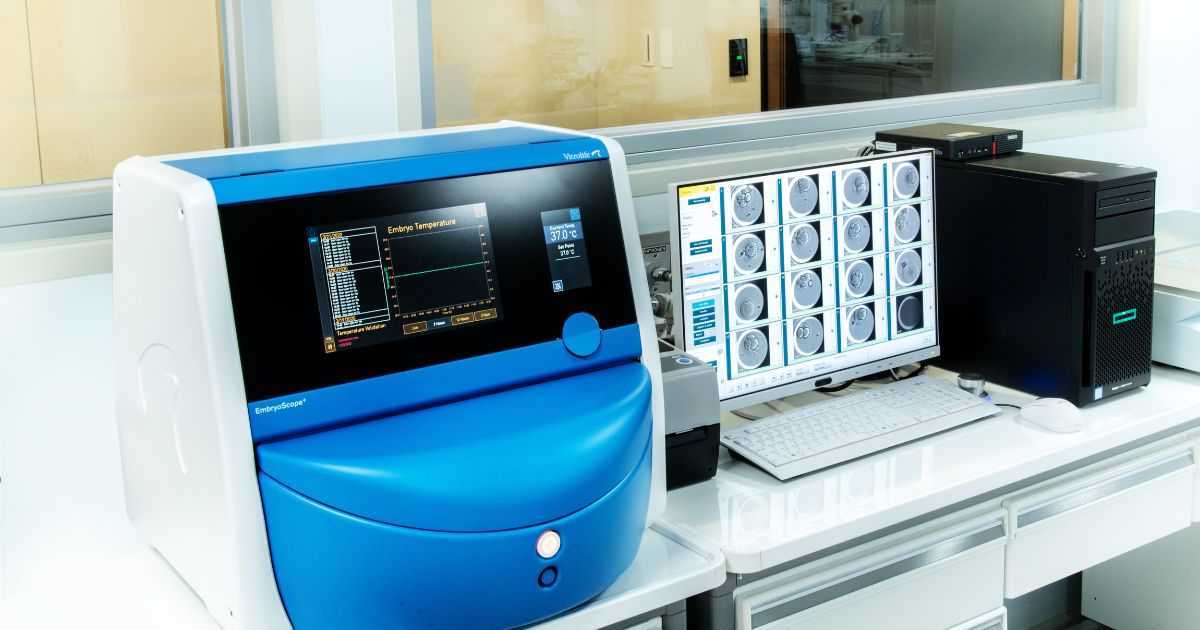
With conventional incubators, embryos must be removed at specific time points for observation — a process that can expose them to fluctuations in temperature and gas levels. TFC (Taipei Fertility Center) uses advanced time-lapse embryoscope technology to provide embryos with a more stable, closely monitored culture environment.
Three Core Advantages of Time-Lapse Incubation
- A Stable, Undisturbed Environment:Gas concentration and temperature remain highly stable throughout, eliminating the need to remove embryos for observation and allowing them to develop undisturbed.
- 24-Hour Continuous Monitoring:An image is automatically captured every 10 minutes, allowing the embryology team to track the full developmental trajectory without ever moving the embryo.
- Precise Detection of Cell Division Events:Every key cell division time point is recorded in detail, allowing even brief, atypical division events (such as multipolar division) to be accurately identified.
AI-Assisted Analysis (KIDScore): Supporting the Selection of High-Quality Embryos
Time-lapse imaging is combined with the KIDScore AI analysis system, which draws on a database of over 100,000 clinical embryo development records. Much like an objective panel of judges, the system scores embryo development based on consistent, data-driven criteria — helping the embryology team identify embryos with stronger implantation potential.
Understanding embryo development and grading is an important first step in the IVF journey. TFC (Taipei Fertility Center) combines an internationally accredited reproductive laboratory, an experienced medical team, and advanced time-lapse incubation technology to support careful, informed decision-making at every embryo transfer.
FAQ: Frequently Asked Questions
Q: If an embryo has a lower grade (e.g., Grade C), is it still possible to achieve a successful pregnancy?
A: Yes. Embryo grading is a non-invasive assessment based on morphological appearance. A lower grade simply reflects slower visible development or a higher degree of fragmentation — it does not necessarily indicate chromosomal abnormalities or an inability to implant. Clinically, many Grade C embryos have gone on to result in healthy babies.
Q: Is it better to transfer a D3 embryo or a D5 blastocyst?
A: There's no universally "better" option — it depends on individual circumstances. D5 blastocysts have already undergone a period of natural selection during extended culture, which is associated with relatively higher implantation rates, and they are also well suited for PGT-A chromosomal screening. D3 embryos may be the more suitable choice when fewer eggs or embryos are retrieved, or when the uterine environment is considered more favorable for continued embryo development than the incubator — an earlier D3 transfer can help avoid the risk of embryo loss during extended culture.
Q: What does a blastocyst grade of "4AB" mean? Does it indicate a high success rate?
A: "4AB" describes a blastocyst with strong developmental potential. The number 4 indicates the blastocoel is fully expanded. The first letter, A, indicates the inner cell mass (which develops into the fetus) has a high cell count and is tightly arranged. The second letter, B, indicates the trophectoderm (which develops into the placenta) has a well-formed structure.
Q: Does a higher embryo grade mean the chromosomes are more likely to be normal?
A: Not necessarily. Embryo grading reflects only the morphological appearance observed by embryologists under a microscope — it cannot directly determine chromosome number or genetic normalcy. Confirming chromosomal status requires PGT-A (PGS) genetic screening.
Q: Why choose a time-lapse incubation system?
A: Conventional incubators require embryos to be removed frequently for observation, which can cause fluctuations in temperature and humidity. Time-lapse incubators automatically capture images every 10 minutes, providing a stable, undisturbed environment throughout the entire culture period. Combined with AI-based analysis (such as KIDScore), this technology helps identify embryos with the strongest implantation potential.