













Physical discomfort in early pregnancy is often a normal response to hormonal changes, but some symptoms may be linked to abnormal embryo development. This article guides you through 7 signs of an unhealthy embryo and their common causes, helping expecting parents better understand what is happening in early pregnancy and support healthy embryo development and implantation. TFC Taipei Fertility Center is by your side as you look forward to welcoming your new little one!
What Are the Signs of an Unhealthy Embryo? 7 Symptoms to Watch For
Most physical changes in early pregnancy are caused by hormonal shifts, but some abnormalities may be related to embryo health. The signs below fall into two categories: symptoms you can notice yourself, and embryo development findings that can only be confirmed through a doctor’s examination. Neither should be self-diagnosed. If you have any concerns, we recommend seeing a doctor for evaluation as soon as possible.
▎4 Abnormal Symptoms You Can Observe Yourself

■ Abnormal Vaginal Bleeding
A small amount of dark red or deep red discharge in early pregnancy is often normal implantation bleeding. However, heavy bleeding, bright red blood, or bleeding with blood clots may be associated with poor embryo development, threatened miscarriage, or even ectopic pregnancy.
■ Persistent Severe Abdominal Pain
In early pregnancy, rising progesterone levels and the growing uterus may cause mild lower abdominal bloating or cramping, which is a normal response. However, prolonged or intense abdominal pain may point to problems such as abnormal embryo development or ectopic pregnancy.
■ Sudden Disappearance of Pregnancy Symptoms
Common early pregnancy symptoms such as morning sickness, breast tenderness, and fatigue may suddenly lessen noticeably or disappear, which can indicate abnormal embryo development. That said, if your pregnancy symptoms are mild to begin with, this sign may be harder to notice.
■ Abnormal Vaginal Discharge
An increase in vaginal discharge is normal in early pregnancy. However, discharge that is streaked with blood or brownish in color may indicate an infection or abnormal embryo development, and we recommend seeing a doctor promptly.
▎3 Signs of Embryo Abnormalities a Doctor May Identify
■ Slow Embryo Development
Embryo size is an indicator used to assess whether development is on track. If the embryo remains smaller than the normal range and does not continue to grow, it may be a sign of an unhealthy embryo.
■ No Fetal Heartbeat Detected or a Weak Heartbeat
Normally, a fetal heartbeat can be detected at 6 to 7 weeks of pregnancy. If no heartbeat is seen after 8 weeks, or the heartbeat is noticeably weak, it may indicate that embryo development has stopped, and you should seek medical attention promptly.
■ Abnormal hCG Level Changes
hCG is an important marker for confirming pregnancy. In a healthy pregnancy, hCG levels rise significantly. If levels rise slowly, plateau, or drop, it may indicate an abnormal embryo condition.
Abnormal Embryo Development? 5 Causes of an Unhealthy Embryo
Whether an embryo can grow and develop steadily usually depends on the embryo’s own genetics as well as the maternal environment. Want to reduce the chance of unhealthy embryo signs? Let’s start with 5 possible causes of an unhealthy embryo:
▎Chromosomal Abnormalities
An incorrect number of chromosomes or structural abnormalities can prevent an embryo from dividing and developing normally. This is one of the most common causes of implantation failure and miscarriage.
▎Uterine Structural Abnormalities
Structural uterine conditions such as uterine fibroids, uterine septum, and adenomyosis may affect embryo development.
▎Risk of Infection
Bacterial or viral infections of the uterus can create a poor environment for the embryo, which may lead to arrested development, malformation, or even loss of the embryo.
▎Metabolic Disorders
If the mother has a metabolic condition such as diabetes, thyroid dysfunction, or hyperlipidemia, the embryo’s nutrient supply may be affected, which can lead to poor development.
▎Unhealthy Lifestyle Habits
Habits such as smoking, heavy drinking, an irregular sleep schedule, and excessive stress may also increase the risk of abnormal embryo development.

Embryo Development Timeline: The Full Journey from Fertilization to Implantation
It takes about 7 to 10 days for an embryo to go from fertilization to implantation. You usually won’t feel anything during implantation itself, but once it succeeds, symptoms such as breast swelling, fatigue, nausea, and light bleeding may gradually appear. Here is the full journey from fertilization to implantation:
- Fertilization (Day 1): When a sperm and an egg unite, they form a fertilized egg, which is the starting point of embryo development.
- Cleavage Stage (Days 2-3): The fertilized egg begins to divide into more and more cells, increasing to 4 and then 8 cells, while continuing to move toward the uterus.
- Morula Stage (Day 4): The cells become more tightly packed and look somewhat like a small mulberry, preparing the embryo for the next stage.
- Blastocyst Stage (Day 5): A fluid-filled cavity forms in the center of the embryo, creating a blastocyst, the stage at which the embryo is able to implant.
- Preparing to Implant (Days 6-7): The blastocyst enters the uterus and looks for a suitable spot on the uterine lining, preparing to attach and establish a connection with the mother.
- Implantation Begins (Days 6-8): Once the blastocyst successfully attaches to the uterine lining, it begins to develop steadily and gradually forms the placenta and the baby.
Embryo Size Chart: Normal Development Range at Weeks 4-7
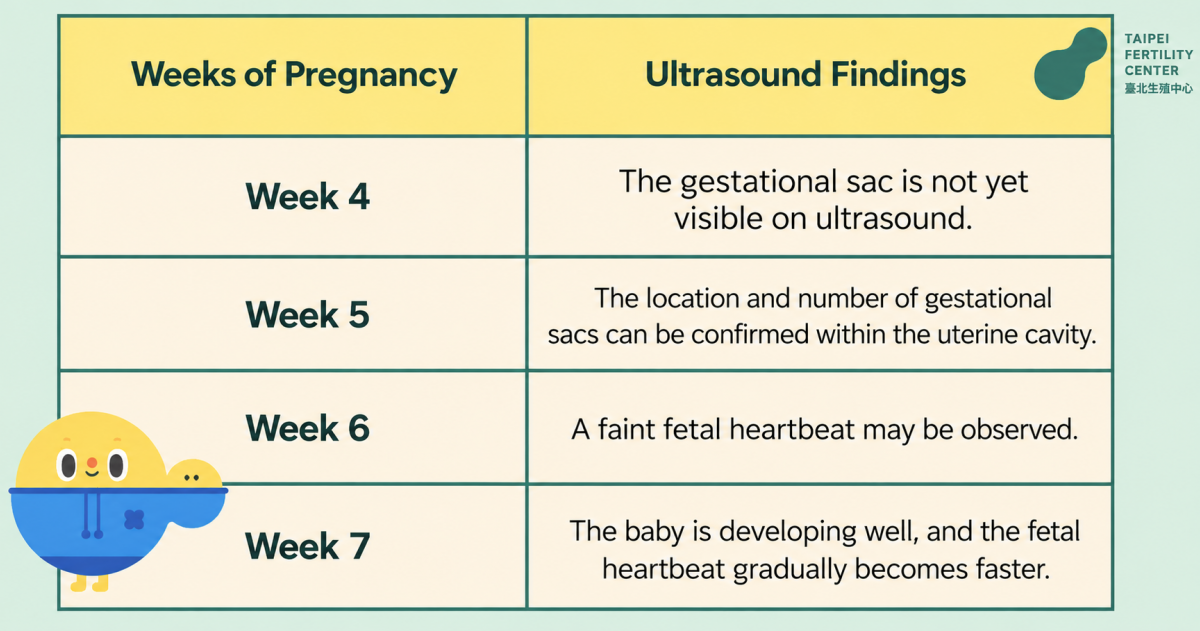
An embryo generally grows larger as pregnancy progresses. If an embryo is much smaller than average, it may be a sign of delayed development or an unhealthy embryo. However, every embryo develops at a slightly different pace, and doctors will still assess embryo health based on a combination of indicators, including ultrasound findings, heartbeat, and hCG changes. The table below shows the corresponding ultrasound findings for weeks 4 to 7 of pregnancy.
Book Your PGT-A, PGT-M, and PGT-SR Embryo Chromosome Screening Today and Safeguard Your Pregnancy Journey!
Symptoms in early pregnancy such as abnormal bleeding, a weak fetal heartbeat, or abnormal hCG levels may be signs of an unhealthy embryo, but this does not necessarily mean there is a problem with the embryo. We recommend regular follow-up visits, genetic screening, and healthy lifestyle habits to help your little one grow more steadily and safely.
When an embryo shows poor development, implantation failure, or recurrent miscarriage, the cause may be hereditary or related to chromosomal abnormalities in the embryo. TFC Taipei Fertility Center has national-level laboratory equipment and an experienced medical team, offering advanced PGT-A, PGT-M, and PGT-SR testing. Comprehensive chromosome and genetic screening before embryo transfer may help identify healthier embryos, which may support implantation success and reduce the risk of passing on hereditary conditions.
PGT-A (Preimplantation Genetic Testing for Aneuploidy): Examines all 23 pairs of chromosomes for numerical abnormalities or missing or duplicated segments, helping identify abnormal embryos and potentially supporting higher implantation and pregnancy rates.
PGT-M / PGT-SR (Preimplantation Genetic Testing for Monogenic Disorders / Structural Rearrangements): For parents who carry a hereditary condition, tests for single-gene defects (PGT-M) and chromosomal abnormalities and translocations (PGT-SR), so that an embryo that is healthy and free of the hereditary condition can be selected for transfer.
Leave it to the professional medical team at TFC Taipei Fertility Center. With advanced testing technology, we will walk with you to help protect your embryo’s healthy growth. Book a consultation today, and let us welcome a worry-free pregnancy together!
Read more:
Ovarian Chocolate Cyst: What Size Needs Surgery?
Premature Ovarian Insufficiency (POI): What to Do & 5 Tips