












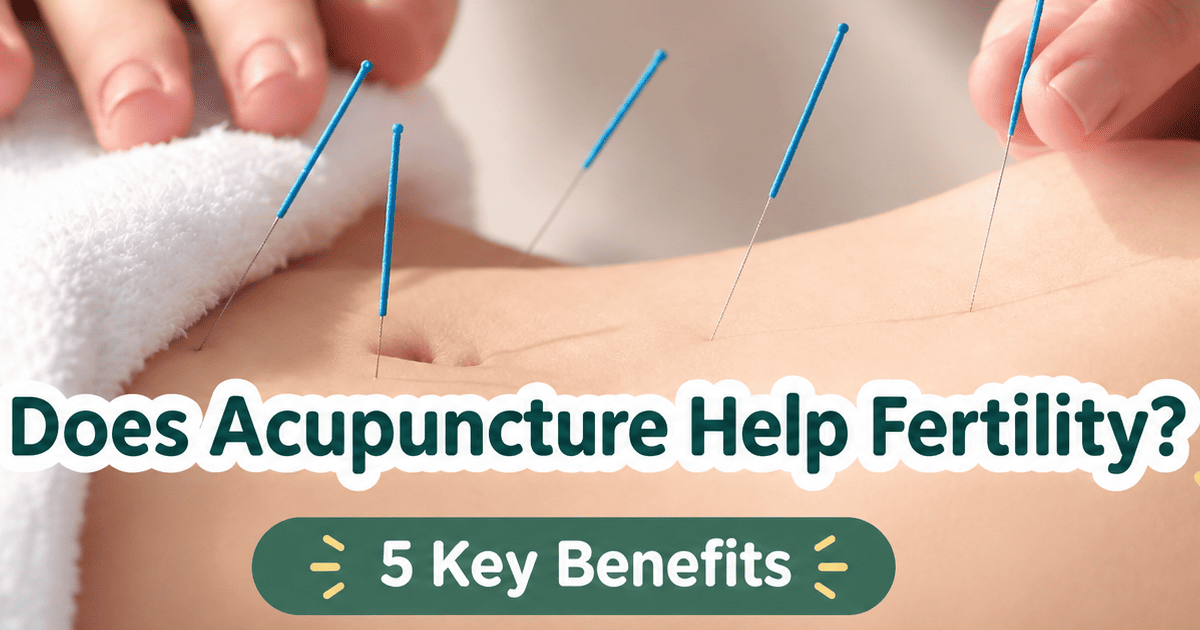
Acupuncture in Fertility: What It Is and How It Helps
When attempting to conceive or undergoing assisted reproductive treatments like IVF or IUI, many couples opt for a combination of Western and traditional Chinese medicine. Acupuncture is one of the most common and effective complementary therapies used.
However, treatment involving "needles" may cause anxiety for many women: "I've already had so many injections during treatment—do I really have to endure more?"
In fact, the needles used in acupuncture are much thinner than ovulation or IV needles, causing minimal to no pain. As long as you're not fasting and your health is stable, chances of feeling faint or dizzy are very low.
This article will guide you through what acupuncture involves and how it can help improve fertility.
What is Acupuncture and its role in pre-conception Care
Acupuncture is a traditional Eastern medical technique with over 3,000 years of history. It involves inserting ultra-fine needles into specific meridians and acupoints on the body to regulate the body's organ systems (zang-fu), Qi (vital energy), blood, and neuroendocrine function. This process helps balance bodily functions and enhances the body's natural healing abilities.
Modern research shows that acupuncture not only relieves anxiety, stress, chronic pain, and respiratory or digestive disorders but also has numerous positive effects on the female reproductive system, including:
- Regulating irregular menstrual cycles
- Improving hormonal imbalances
- Alleviating menopausal symptoms
- Increasing the success rates of assisted reproductive treatments
- Reducing side effects from the treatment and psychological stress
These findings have gained increasing recognition and acceptance in international journals and the field of reproductive medicine.
5 Key Benefits of Acupuncture for Fertility
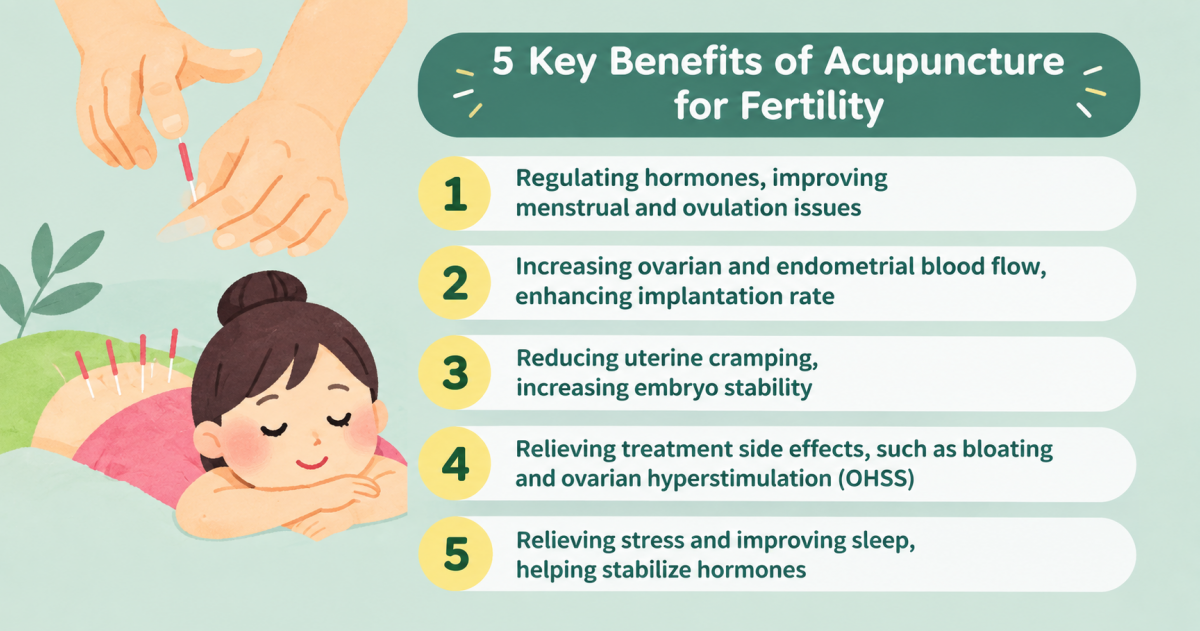
- Regulating hormones and improving menstrual and ovulation issues: Acupuncture stimulates neurotransmitter release like dopamine, serotonin, and endorphins, which help regulate the hypothalamic-pituitary-ovarian (HPO) axis. This leads to balanced hormone secretion and improved ovulation function. During IVF or assisted reproductive treatment, acupuncture can also support embryo implantation and reduce the risk of miscarriage.
- Increasing ovarian and endometrial blood flow to enhance implantation success rate: Optimal blood flow is essential for the development of high-quality oocytes and a receptive endometrial lining. Acupuncture has been shown to improve circulation to the ovaries and uterus, thereby promoting a thicker, more hospitable endometrium. These effects can increase the likelihood of successful embryo implantation during assisted reproductive treatments.
-
Reducing uterine spasms to enhance embryo stability: Excessive uterine contractions during embryo implantation may lead to implantation failure. Acupuncture helps calm the uterus, reducing spasms and alleviating symptoms like menstrual cramps and pelvic discomfort, thereby creating a more stable environment for embryo implantation.
-
Alleviating treatment side effects such as bloating and ovarian hyperstimulation: Some patients may experience bloating, ascites, or lower back pain after ovulation induction or egg retrieval. Acupuncture promotes the smooth flow of Qi and blood circulation, effectively alleviating these side effects.
-
Relieving stress and improving sleep quality to support hormonal balance: During pre-conception and assisted reproductive treatment, psychological stress and insomnia often interact with and exacerbate each other, further disrupting endocrine and immune function. Acupuncture stimulates the release of endorphins and serotonin, helping to reduce stress, relax muscles, slow breathing, improve sleep quality, and regulate immunity. This helps stabilize hormone secretion and enhances reproductive treatment outcomes.
Don't underestimate the power of acupuncture on your fertility journey
Whether you're trying to conceive naturally, undergoing assisted reproductive treatments, or working on regulating your menstrual cycle and hormones, acupuncture is an essential complementary therapy.
Some may be concerned about potential interactions between traditional Chinese medicine (TCM) herbs and Western medications. Rest assured, treatments are carefully coordinated by both TCM practitioners and Western medicine specialists. In specific phases in reproductive treatment, acupuncture alone or combined with carefully selected herbal formulas can synergize greater effects than the sum of its parts.
Acupuncture may even improve the efficacy of Western injectable medications by stimulating key meridians. TCM doctors tailor herbal prescriptions to individual needs, complementing Western treatments ultimately increasing the chances of conception.