













Ovarian function is key to successful conception and serves as a fundamental indicator of a woman's fertility. AMH (Anti-Müllerian Hormone) is a key marker for assessing ovarian reserve—the remaining "stock" of eggs in the ovaries—and is an important indicator for predicting future fertility potential.
AMH testing is suitable for anyone, including couples trying to conceive, single women, younger women, and those of advanced maternal age. Regular AMH testing not only allows you to track your ovarian status over time, but also enables early evaluation of whether egg freezing may be necessary if abnormal levels are detected, helping to safeguard future fertility options.
This article will explain what AMH is, why it can be used to assess fertility potential, provide the normal reference range for AMH levels, and answer common questions.
What Is AMH? Why Should You Get Tested?
AMH, or Anti-Müllerian Hormone, is a hormone secreted by follicles in the ovaries. Its level reflects the remaining supply of eggs in the ovaries and is currently a key indicator commonly used to assess fertility in IVF and IUI treatments.
AMH testing is done through a simple blood draw—no fasting is required, and it can be scheduled at any point in your menstrual cycle. At TFC Taipei Fertility Center, results are available in as little as 90 minutes.
What Is a Normal AMH Level? Understanding the Relationship Between AMH and Age
An AMH level between 2 and 5 ng/mL is generally considered within the normal range. A value above 5 may indicate Polycystic Ovary Morphology Syndrome (PMOS), while a value below 2 may be a sign of diminished ovarian reserve. If you're planning for pregnancy in the future, it's recommended to consider egg freezing early to avoid missing the optimal window.
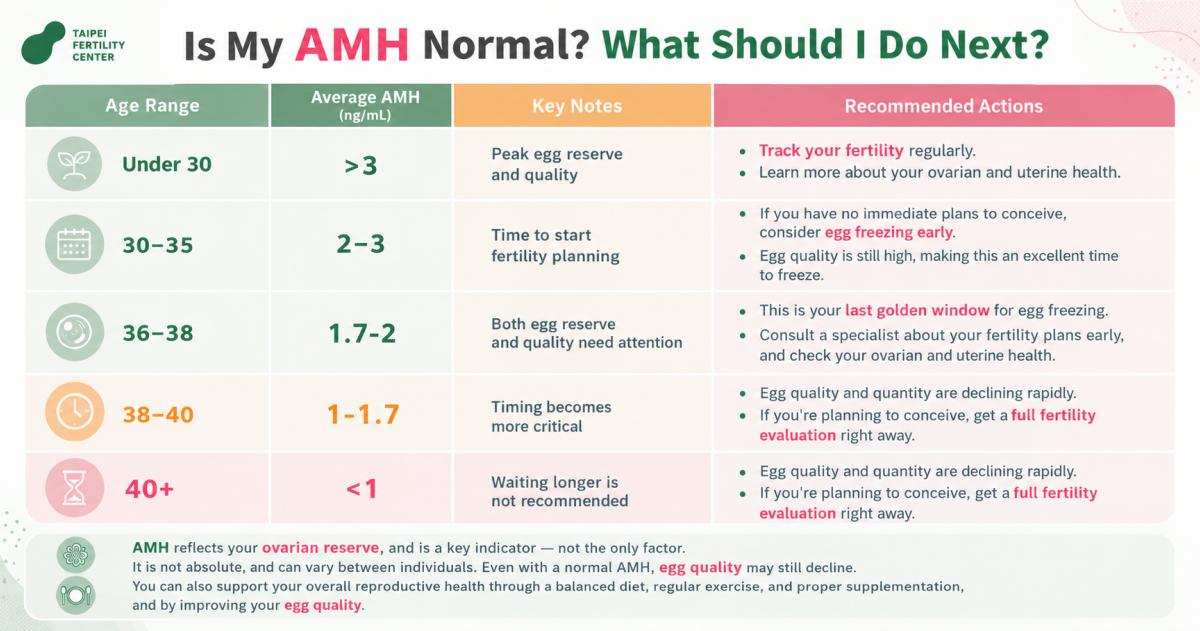
AMH levels typically decline gradually as women age, particularly after age 35, when both egg quality and the risk of chromosomal abnormalities increase. For this reason, those with future fertility plans are encouraged to proactively consider whether early egg freezing may be worthwhile.
Below is a reference table of average AMH levels by age range:
What Should You Do If Your AMH Is Low?
A low AMH level indicates a reduced egg reserve or may signal diminished ovarian reserve, which lowers the chances of natural conception. If this applies to you, it's advisable to consult a reproductive medicine specialist about your fertility plans as soon as possible. Pregnancy is still possible with the help of assisted reproductive technology—early detection, early consultation, and early treatment all improve your chances.
How to Support Ovarian Health Day to Day
Follow a Mediterranean-style diet, emphasizing plenty of fruits and vegetables, lean proteins (such as fish and chicken) in place of red meat, whole grains, and healthy fats (such as olive oil). Increase your intake of foods rich in folate and phytoestrogens, such as legumes, fruit, white fungus, yam, leafy greens, and liver, along with supplements like CoQ10 and DHEA.
Maintain a regular exercise routine, get sufficient sleep, and manage stress to support emotional wellbeing. Avoid staying up late, quit smoking and drinking, and monitor your weight to keep your BMI within the normal range (18.5–24).
Common AMH Questions (FAQ)
Q1. What is AMH, and what can an AMH test tell you?
AMH (Anti-Müllerian Hormone) is a key indicator of a woman's ovarian function and egg reserve. An AMH test reveals the number of available eggs in the ovaries, helping to assess fertility potential, likelihood of IVF success, and whether early egg freezing may be advisable.
Whether or not you're planning for pregnancy, AMH is a valuable indicator for women's health management. TFC recommends that women over 20 have their AMH level tested annually.
Q2. What is a normal AMH level, and is it related to age?
Generally, a normal AMH level falls between 2–5 ng/mL. An AMH below 2 may indicate declining ovarian function, while a level above 5 may be associated with Polycystic Ovary Morphology Syndrome (PMOS).
AMH levels tend to decline with age, especially after 35, when both egg quality and quantity decrease noticeably. Women who are planning for pregnancy or considering egg freezing are encouraged to schedule an AMH test early.
Q3. How is AMH tested? Can it be done during menstruation?
AMH testing requires only a simple blood draw and is not affected by your menstrual cycle, pregnancy status, or medications—it can be done at any time.
Women over 20 are recommended to have their AMH level checked once a year to monitor ovarian health. If you're trying to conceive or undergoing IVF treatment, your doctor may recommend adjusting the testing frequency accordingly.
Q4. How much does an AMH test cost, and where can I get tested?
AMH testing is not covered by insurance and is available at most OB-GYN clinics, reproductive medicine centers, and professional laboratories.
The average cost is around NT$800–1,000. At TFC Taipei Fertility Center, results are available in as little as 90 minutes.
Q5. What should I do if my AMH is low? Can ovarian function be improved?
A low AMH level indicates declining ovarian function or a reduced egg reserve. Lifestyle changes can help, including:
- Maintaining a regular routine and avoiding late nights and excessive stress
- Limiting exposure to plasticizers, cigarettes, and other environmental hormone disruptors
- Taking supplements rich in folate, vitamin E, CoQ10, and DHEA
- Eating more legumes, yam, white fungus, and leafy greens to support ovarian health
If your AMH remains low and you're planning for pregnancy, talk to your doctor about timing for egg freezing or fertility treatment.
Q6. What does a high AMH level mean? Can it affect pregnancy?
An elevated AMH level (typically >5 ng/mL) may be associated with Polycystic Ovary Morphology Syndrome (PMOS), indicating a large number of immature follicles in the ovaries. This can result in irregular or absent ovulation, which may lower the chances of pregnancy.
If your AMH is elevated, consider:
- Maintaining a healthy weight (BMI 18.5–24)
- Exercising moderately and adjusting your diet
- Consulting your doctor about medication or lifestyle changes to help stabilize your cycle
Early intervention can effectively improve pregnancy success rates.
TFC Taipei Fertility Center: Your Trusted Choice for Egg Freezing
TFC Taipei Fertility Center is a flagship fertility center in Asia specializing in IVF and egg freezing programs. Our expert medical team, made up of experienced physicians, brings not only advanced expertise in egg retrieval and freezing but also extensive hands-on IVF experience. We also offer Chinese medicine, nutrition counseling, and psychological counseling services to support your physical, mental, and emotional wellbeing every step of the way—helping you feel comfortable and confident on your journey to parenthood.
Read more: Understanding Infertility Symptoms and Causes: 3 Tips to Improve Your Fertility Health