












Table of Contents
-
What Is IVF? Who Is a Good Candidate for IVF Treatment?
-
1.1 What Is IVF? Understanding the Technology and TFC’s IVF Success Rate Performance
-
1.2 Who Is IVF Suitable For?
-
-
IVF Success Rates Explained: Evaluating Treatment Outcomes Through Data and Key Factors
-
2.1 Is the IVF Success Rate High on the First Attempt? Understanding Global Data and Age Differences
-
2.2 What Factors Affect IVF Success?
-
-
How to Improve IVF Success Rates? 6 Key Tips
-
Tip 1: Assess Your Fertility Early and Make the Most of Your Optimal Treatment Window
-
Tip 2: Consider Egg Freezing Early If You’re Unsure About Your Family Plans
-
Tip 3: Maintain Healthy Lifestyle Habits
-
Tip 4: Avoid Endocrine-Disrupting Chemicals
-
Tip 5: Complement Treatment with Traditional Chinese Medicine
-
Tip 6: Choose Single Embryo Transfer
-
-
How Does IVF Treatment Work? A 4-Step Overview of the Process
-
Frequently Asked Questions About IVF Success Rates
-
Q1: How Can PGT-A and Time-lapse Technology Support IVF Outcomes?
-
Q2: What Tests Should Couples Have First to Prepare for IVF?
-
Q3: How Can You Optimize the Ovarian and Uterine Environment for IVF?
-
Q4: How Can You Manage Your Emotional Well-being While Trying to Conceive and During IVF?
-
-
Where to Get IVF? How TFC Taipei Fertility Center Supports Couples on Their Path to Parenthood
1. What Is IVF? Who Is a Good Candidate for IVF Treatment?
In vitro fertilization (IVF) is a fertility treatment in which eggs and sperm are fertilized in the laboratory, the resulting embryos are cultured, and a suitable embryo is then transferred into the uterus. IVF is commonly recommended for couples facing blocked fallopian tubes, male factor infertility, advanced maternal age, or unexplained infertility, as well as those who wish to preserve their fertility.
1.1 What Is IVF? Understanding the Technology and TFC’s IVF Success Rate Performance
In vitro fertilization (IVF) is one of the most common treatments for infertility. In this procedure, retrieved eggs and sperm are fertilized outside the body and the embryos are cultured in the laboratory. A suitable embryo is then transferred into the uterus to support implantation, helping couples who have difficulty conceiving move closer to pregnancy.
With advances in reproductive medicine, IVF can now be combined with preimplantation genetic testing for aneuploidy (PGT-A) when clinically appropriate, to assess whether an embryo has a normal number of chromosomes. In addition, TFC’s embryology laboratory is equipped with state-of-the-art time-lapse incubators, which allow close monitoring of embryo development and help physicians plan more precise treatment, which may help improve the chances of pregnancy.
TFC Taipei Fertility Center is led by Dr. Chii-Ruey Tzeng, known as the “Father of IVF in Taiwan,” and its team of experienced physicians has supported more than 30,000 couples from over 50 countries, tailoring IVF treatment plans to each couple’s needs. Among women under 38, the pregnancy rate is nearly 70%, which is higher than the averages in Taiwan and worldwide.
1.2 Who Is IVF Suitable For?
IVF is mainly recommended for couples who have a lower chance of conceiving naturally, or who have not conceived after other treatments. Physicians determine whether IVF is appropriate based on both partners’ ages, reproductive health, the cause of infertility, and overall physical condition. Common candidates include:
-
Individuals with structural or functional reproductive issues: Conditions in women such as low ovarian reserve, ovulation disorders, blocked or removed fallopian tubes, severe endometriosis, or pelvic adhesions may reduce the chance of natural conception, or prevent an embryo from implanting successfully after fertilization. For men, factors such as low sperm count or poor sperm motility may also make IVF an option to consider.
-
Individuals affected by age or unexplained infertility: A woman’s fertility gradually declines with age, and egg quantity and quality may drop noticeably after age 35. If no clear cause of infertility is found after testing, or if a couple has been trying to conceive naturally for six months or more without success, a physician can assess whether IVF is appropriate.
-
Individuals with genetic conditions or repeated pregnancy failure: Couples with a known genetic condition, recurrent pregnancy loss, or multiple failed embryo transfers may combine IVF with relevant embryo testing technologies. Their physician can then plan the next steps in treatment, which may help improve the chances of a successful pregnancy.
-
Individuals who need to preserve fertility before medical treatment: Treatment for cancer or other illnesses may damage a woman’s reproductive function. Patients who wish to have children in the future are encouraged to preserve their fertility, for example through egg freezing, before treatment begins. They may then still pursue parenthood through IVF later.
-
Single women and female couples planning for parenthood: Under Taiwan’s current Assisted Reproduction Act, single women and female same-sex couples are not yet eligible for assisted reproduction treatment, though amendments to expand eligibility are moving forward. Those planning to have children can start with a fertility assessment to understand their ovarian function and reproductive health. They may also consider egg freezing to preserve their fertility, in preparation for future assisted reproduction treatment.
2. IVF Success Rates Explained: Evaluating Treatment Outcomes Through Data and Key Factors
IVF success rates are shaped by several factors, including the woman’s age, ovarian function, embryo quality, uterine environment, and treatment techniques, so outcomes vary from patient to patient. The data and key factors below can help you understand what influences IVF success rates.
2.1 Is the IVF Success Rate High on the First Attempt? Understanding Global Data and Age Differences
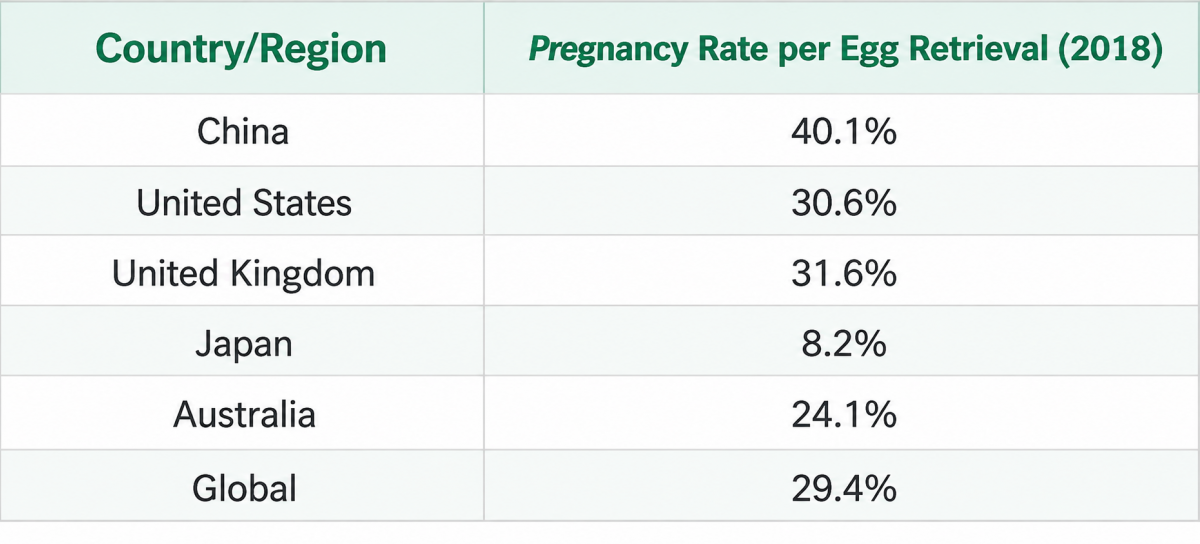 (Source: ICMART World Report 2017–2018, Table 2a)
Success Rates by Age of the Woman Undergoing Treatment
According to data from Taiwan’s Health Promotion Administration, IVF outcomes are affected by the age of the woman undergoing treatment. The table below shows live birth rates per embryo transfer cycle in 2023 among Taiwanese patients using their spouse’s eggs and sperm.
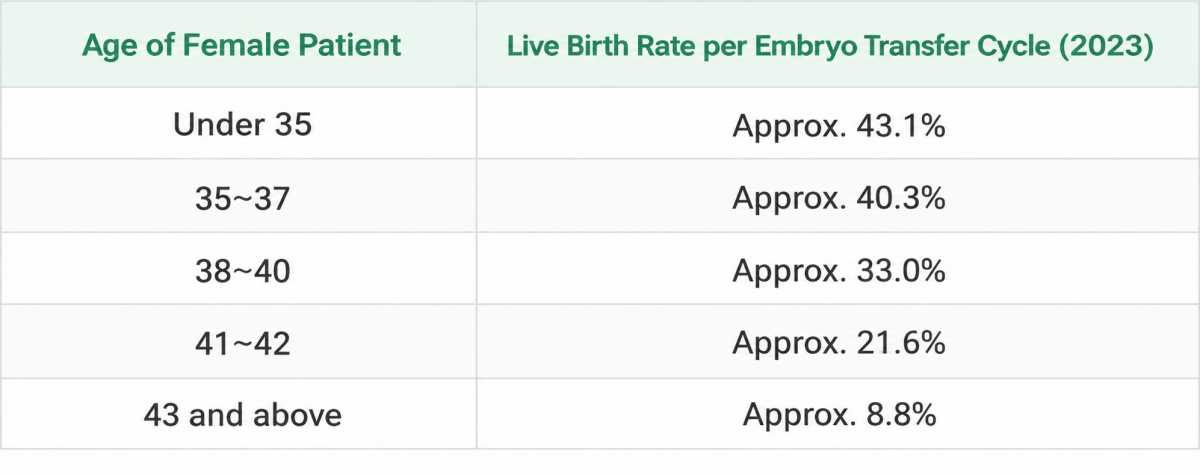
Overall, live birth rates after IVF tend to decline as a woman’s age increases. This is because egg quantity decreases, egg quality changes, and the likelihood of chromosomal abnormalities in embryos rises. If you are planning to have children, we recommend having your fertility assessed early and discussing suitable preconception or treatment options with your physician.
2.2 What Factors Affect IVF Success?
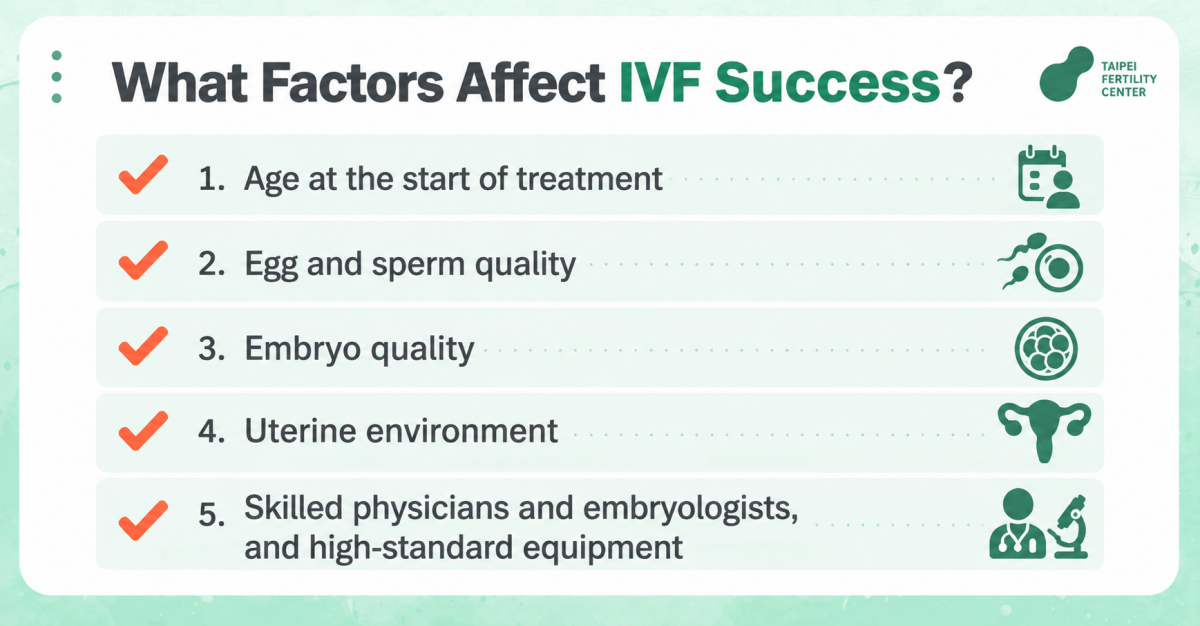
1. Age at the Start of Treatment
A woman’s age is one of the most important factors influencing IVF success rates. As women get older, egg quality may decline and the likelihood of chromosomal abnormalities in embryos increases, which can affect fertilization, embryo development, and the chances of a successful pregnancy.
2. Egg and Sperm Quality
In IVF, the quality of the sperm and eggs affects fertilization and embryo development. Men can have a semen analysis to check sperm count, motility, and morphology, while women can take an AMH (anti-Müllerian hormone) test to assess ovarian reserve. These results are then evaluated together with age, ovarian function, and other fertility factors. When sperm and egg quality are better, there may be a greater chance of forming healthy embryos.
3. Embryo Quality
After fertilization, an embryo’s development and quality influence how the transfer is planned. Depending on clinical needs, IVF can be combined with preimplantation genetic testing for aneuploidy (PGT-A) to check whether an embryo has a normal number of chromosomes. Time-lapse incubators can also continuously record embryo development, giving physicians a fuller picture of embryo status to help them select a suitable embryo for transfer.
4. Uterine Environment
An endometrial thickness of 7-12 mm (0.7-1.2 cm) is generally considered most favorable for embryo implantation. An endometrium that is too thin or too thick, or conditions such as polyps, adhesions, inflammation, or fibroids, can create an environment less favorable for implantation.
5. Skilled Physicians and Embryologists, and High-Standard Equipment
IVF requires close collaboration among physicians, embryologists, and a professional laboratory. Every stage, from treatment planning and egg retrieval to fertilization and embryo culture, depends on expertise, experience, strict process management, and a stable environment.
At TFC, physicians design personalized treatment plans and precise medication protocols based on each patient’s age, health, and fertility profile. Embryologists handle sperm and egg processing, fertilization, and embryo culture in the laboratory, using precision instruments to continuously monitor sperm, eggs, and embryos and to assess which embryos are suitable for culture and transfer.
The equipment and culture environment of the embryology laboratory are also important factors in IVF outcomes. Temperature, humidity, gas concentration, and air quality in the laboratory are all strictly controlled. In addition to careful handling, embryologists rely on extensive experience and multiple fail-safe checks. Stable culture equipment and standardized procedures help provide the conditions embryos need to develop, which in turn supports the quality of IVF treatment.
3. How to Improve IVF Success Rates? 6 Key Tips
IVF outcomes are influenced by many factors, including both partners’ health, lifestyle habits, embryo culture, the physician’s transfer strategy, and treatment planning. Assessing your fertility early, preparing your body, and choosing a suitable treatment approach can help you prepare more thoroughly for treatment.
Tip 1: Assess Your Fertility Early and Make the Most of Your Optimal Treatment Window
A woman’s age is one of the key factors affecting IVF success rates. As women get older, egg quantity and quality gradually decline and the likelihood of chromosomal abnormalities rises, all of which may lower IVF success rates. Pregnancy at an older age may also carry a higher risk of preterm birth and pregnancy-related complications.
We therefore recommend that both partners have a preconception health check early, so they understand their fertility status and can prepare more thoroughly. Women under 35 who have been trying to conceive regularly for one year without success, or women 35 and older who have been trying for six months, are advised to undergo an infertility evaluation together with their partner.
Tip 2: Consider Egg Freezing Early If You’re Unsure About Your Family Plans
Younger women generally have a greater number of eggs and better egg quality, and ages 30 to 35 are often considered a more suitable stage for egg freezing. Eggs frozen at a younger age generally lead to better outcomes when thawed and used later. As age increases, the number of mature eggs retrieved per cycle may decrease, and some older women may need multiple retrieval cycles to accumulate the number of eggs they hope for.
If you are not yet planning to have children, egg freezing allows you to keep your options open. When you are ready, the eggs you froze at a younger age can be used in IVF treatment to help you build the family you hope for.
Tip 3: Maintain Healthy Lifestyle Habits
Keeping a regular routine and a balanced diet while preparing for pregnancy helps maintain your overall health and lays a good foundation for IVF treatment.
A Mediterranean-style diet is recommended, with adequate protein, omega-3 fatty acids, vitamins, and minerals to help maintain hormonal balance and healthy body function. While preparing for pregnancy, keep the following diet and lifestyle habits in mind:
- Limit high-fat and high-sugar foods: Eating too many fried foods and refined sugars may affect weight, blood sugar, and inflammation in the body. A balanced diet helps support sperm and egg quality.
- Eat more whole, unprocessed foods: Natural ingredients generally retain more of their nutrients and reduce your intake of additives. Choose vegetables, fruits, whole grains, fish, eggs, and legumes in your daily meals.
- Moderate your caffeine and alcohol intake: Excess caffeine may affect metabolism, so daily intake should not exceed 200 mg. Avoid alcohol while preparing for pregnancy and during pregnancy.
- Quit smoking and avoid secondhand smoke: Smoking may affect the reproductive health of both men and women. Both partners are encouraged to quit smoking while preparing for pregnancy and to reduce exposure to secondhand smoke.
Beyond diet, trying to conceive and undergoing IVF can bring emotional stress, and prolonged tension, anxiety, or high stress may also affect treatment outcomes. Regular exercise and relaxation techniques that suit you can help both partners maintain a positive outlook. If needed, seek support from a physician, dietitian, or mental health professional to build a health management approach that fits your situation, so you can face treatment in a steadier physical and emotional state.
Tip 4: Avoid Endocrine-Disrupting Chemicals
Endocrine-disrupting chemicals (EDCs), sometimes called environmental hormones, can interfere with the body’s normal hormone function and, in turn, affect reproductive health. Long-term exposure may affect sperm quality in men, and may be linked to early puberty in girls and a higher risk of gynecological conditions that can lead to infertility in women.
Common EDCs include dioxins, plasticizers, and polychlorinated biphenyls (PCBs), which are found in everyday items such as plastic products, pesticides, cleaning products, and certain chemicals. To reduce your exposure:
- Avoid holding hot food in plastic containers that are not heat-resistant, and avoid microwaving food directly in plastic.
- Choose cosmetics, skincare, and cleaning products from clear sources that meet safety standards.
- Avoid herbal medicines of unknown origin, which may be contaminated with heavy metals.
- Wash fruits and vegetables thoroughly to remove pesticide residues.
Tip 5: Complement Treatment with Traditional Chinese Medicine
Some couples also use Traditional Chinese Medicine (TCM), such as acupuncture, cupping, and herbal remedies, as complementary therapies for body conditioning and symptom care, to help create favorable conditions for conception. TFC Taipei Fertility Center offers an integrated TCM and Western medicine clinic, in which TCM practitioners work alongside reproductive physicians to plan gentle preconception care, support egg and sperm quality, and help optimize the uterine environment. This helps couples prepare for IVF in the way that suits them best.
Tip 6: Choose Single Embryo Transfer
Reproductive medicine practice in Taiwan and abroad increasingly favors a single embryo transfer strategy, which reduces the risk of preterm birth, low birth weight, pregnancy complications, and twin or multiple pregnancies. In clinical practice, physicians use appropriate embryo selection and transfer planning to balance the chance of a live birth with the safety of mother and baby.
4. How Does IVF Treatment Work? A 4-Step Overview of the Process
IVF treatment is personalized for each patient based on age, ovarian function, AMH level, and overall health. Each stage has its own treatment focus, from ovarian stimulation and egg retrieval to fertilization, embryo culture, and embryo transfer. Here is an overview of the 4 main steps, from the start of treatment to embryo transfer.
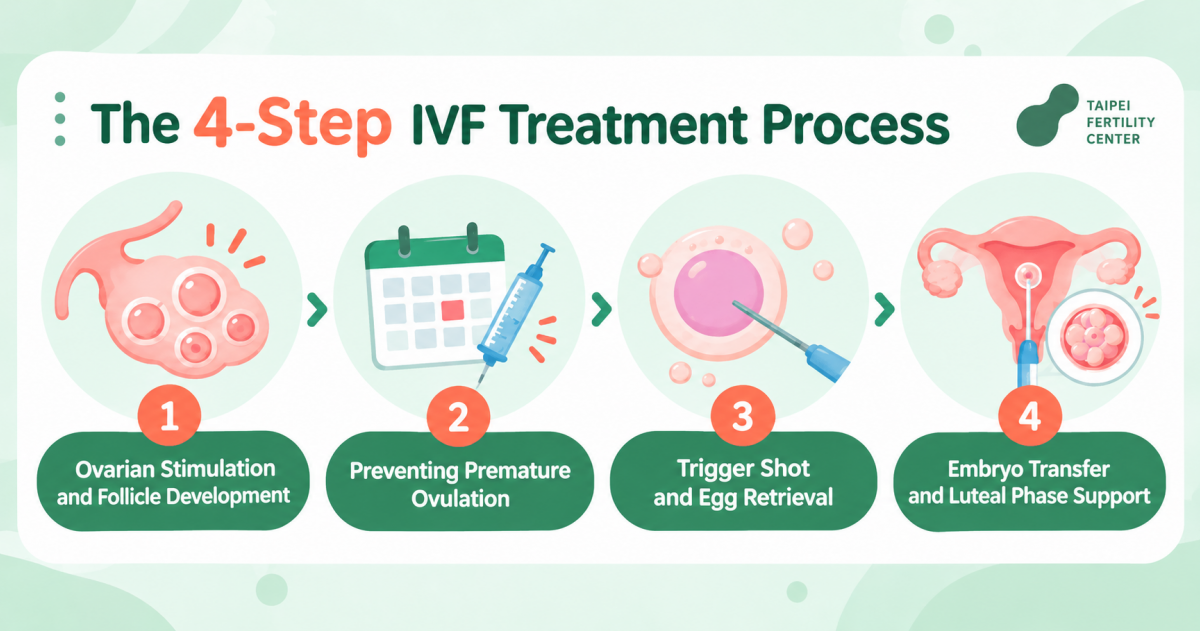
- Ovarian Stimulation and Follicle Development: In a natural cycle, a woman usually releases only one egg per month. In IVF, ovulation medications and injections stimulate the ovaries so that multiple follicles develop at the same time, increasing the chance of retrieving mature eggs. Your physician will choose suitable injectable medications based on your condition, and in some cases may add oral ovulation medication to adjust the treatment plan.
- Preventing Premature Ovulation: To prevent ovulation from occurring naturally before egg retrieval, medications that suppress ovulation may be used during treatment to help control its timing. Follicle development is monitored throughout, so the egg retrieval can be scheduled at the right time.
- Trigger Shot and Egg Retrieval: Once the follicles have developed to the appropriate stage, a trigger shot is given, and the egg retrieval procedure is performed about 34 to 36 hours later. The retrieved eggs are then fertilized with sperm in the laboratory to form embryos.
- Embryo Transfer and Luteal Phase Support: Before the transfer, your physician will assess embryo quality and the condition of the uterine lining, and will prescribe progesterone to maintain an environment suitable for implantation. After the transfer, you will need to continue taking medication as directed by your physician. A pregnancy test is usually done about 12 to 14 days after the transfer to confirm whether you are pregnant.
5. Frequently Asked Questions About IVF Success Rates
Q1: How Can PGT-A and Time-lapse Technology Support IVF Outcomes?
With advances in reproductive medicine, IVF now focuses not only on egg and sperm quality but also on embryo testing and culture technologies. These help physicians evaluate embryo status more precisely and provide additional reference points for treatment planning.
- PGT-A: This test checks whether an embryo has a normal number of chromosomes, helping to identify embryos that may be more suitable for transfer. This may reduce the risk of implantation failure or miscarriage caused by chromosomal abnormalities.
- Time-lapse incubators: These record continuous images of embryos during culture, capturing their rate of development and changes in morphology. This allows the medical team to observe how embryos divide and grow, as a reference for selecting a suitable embryo for transfer.
With these supporting technologies, physicians can combine a patient’s age, embryo condition, and treatment circumstances to develop an IVF strategy that better fits individual needs.
Q2: What Tests Should Couples Have First to Prepare for IVF?
To support IVF success, the following tests are important:
- Men → Semen analysis: Checks whether sperm count, motility, and morphology are normal.
- Women → AMH test (ovarian reserve): Assesses ovarian reserve and the expected response to ovarian stimulation, helping the physician plan a suitable stimulation protocol.
- Women → Uterine evaluation: Checks for polyps, endometrial abnormalities, adhesions, fibroids, or other conditions that may interfere with implantation, so they can be addressed.
A thorough evaluation before treatment allows physicians to adjust the treatment strategy to both partners’ health and helps make IVF treatment planning more precise.
Q3: How Can You Optimize the Ovarian and Uterine Environment for IVF?
Healthy ovarian function and a healthy uterine environment are important for IVF. The following everyday habits can help prepare your body for conception and embryo transfer:
- Maintain a healthy weight: Being overweight or underweight may disrupt hormonal balance. A healthy adult BMI range is 18.5 to under 24, and maintaining a healthy weight supports normal body function.
- Build a regular exercise habit: Moderate activities such as brisk walking, yoga, and swimming help maintain energy and overall health. Once treatment begins, adjust the intensity of your exercise as your physician advises, and avoid strenuous workouts.
- Maintain intimate health: The vagina does not need to be completely sterile. Keeping a healthy balance of normal vaginal flora is more important. Avoid excessive cleansing, and see a doctor promptly if you notice unusual discharge, odor, or discomfort.
- Address gynecological conditions early: If you have endometriosis, fibroids, polyps, or ovarian cysts such as endometriomas (chocolate cysts), your physician can assess whether treatment is needed and which approach is suitable.
- Reduce exposure to substances that may affect reproductive health: While preparing for pregnancy, quit smoking, avoid secondhand smoke and alcohol, and reduce exposure to endocrine-disrupting chemicals such as plasticizers.
Q4: How Can You Manage Your Emotional Well-being While Trying to Conceive and During IVF?
IVF is a journey that takes patience and courage. From initial testing and medication to waiting for embryo results, every stage can bring both hope and stress. Along with following your physician’s treatment plan, remember to take care of your emotional health so that you stay in a steadier state of mind and body.
- Keep your usual routine: You do not need to put your life on hold while preparing to conceive. If your work and living environment do not place excessive strain on you, you can continue working, spending time with family and friends, and doing activities you enjoy, rather than focusing all your attention on the outcome of treatment.
- Find stress relief that works for you: Prolonged high stress may affect your physical health. Try exercise, hobbies, travel, or other ways to relax, and seek support from a mental health professional if needed.
- Keep realistic expectations and trust professional assessments: IVF success rates are influenced by many factors, including age, sperm quality, ovarian function, embryo quality, and the uterine environment, and pregnancy is not guaranteed after treatment. Understanding your own circumstances and what you may face, communicating openly with your physician, building a suitable treatment plan, and knowing the possible outcomes will help you approach each stage at a pace that suits you.
6. Where to Get IVF? How TFC Taipei Fertility Center Supports Couples on Their Path to Parenthood
Every journey toward parenthood carries a couple’s hopes for a new life. When facing IVF treatment, medical technology and equipment matter, and so do the experience and support of the professional team.
TFC Taipei Fertility Center was founded by Dr. Chii-Ruey Tzeng, known as the “Father of IVF in Taiwan.” Its team of experienced reproductive physicians, embryologists, and nurses designs personalized treatment plans based on each patient’s circumstances, and has supported more than 30,000 prospective parents from 50 countries in pursuing their hopes of having a child. TFC has also held the National Quality Mark (SNQ) certification for five consecutive years and actively takes part in reproductive medicine exchanges and research around the world, bringing extensive clinical experience and international-level research capacity.
TFC’s embryology laboratory is built to international reproductive medicine standards. It uses time-lapse embryo imaging and the latest AI-assisted embryo technology, along with a 24-hour laboratory environmental control system and an earthquake-resistant building, to provide stable conditions for culturing eggs, sperm, and embryos. TFC’s embryologists have more than 10 years of experience, having reviewed tens of thousands of embryos and handled more than 20,000 cycles. The laboratory reports an egg survival rate after thawing of over 95% and an embryo survival rate after thawing of 99.25%.
Beyond professional medical care, TFC also values the patient experience during treatment. Located in the Nanshan Plaza building in Taipei’s Xinyi District, the clinic offers comfortable waiting areas, comprehensive safety facilities, and convenient transportation, creating a reproductive care environment that combines quality medical care with peace of mind to support couples on their journey toward parenthood.
Want to learn more about IVF treatment? TFC Taipei Fertility Center is here to help you plan your path to pregnancy.
References:
- ICMART world report 2017–2018, Table 2a
- Health Promotion Administration, Ministry of Health and Welfare, Analysis Report on Assisted Reproduction Outcomes, 2023 (ROC Year 112)